In clinical labs and central testing, the rack or plate swap in front of an analyzer—empty rack in, full rack out, tubes or microplates seated in order—is one of the highest-repeat, highest-attention tasks on a shift. Night techs rarely struggle with “how to run the instrument.” They struggle with hundreds of bends per shift, mis-seated racks that reject or rerun, and fill-ins who do not know every rack SKU. A collaborative arm here does not replace interpretation—it moves known-good pick-and-place paths off people and leaves them on exceptions, QC sign-off, and alarm response.
What a rack-loading cell actually does in the lab
A typical loop (varies by analyzer and LIS handshake):
Infeed — empty or pending rack arrives at the pick station (conveyor, drawer, or fixed slot—depends on your pre-analytical layout)
Locate — fixture or vision confirms rack type, orientation, and datum (do not skip this on mixed rack lines)
Transfer — taught path inserts the rack or plate into the analyzer dock—or removes it
Handoff — full rack exits, empty rack replenishes; real bottlenecks are often LIS ready signals and human review, not arm motion
You automate repeatable rack motion and dock pose—not “auto-generated reports.”
What you usually gain on the floor
Less repetitive bending and wrist load. Dozens of rack moves per shift add up; the arm owns fixed-height pick-and-place while the tech stands offset for visual check and exceptions.
More consistent seating, fewer rejects and reruns. Late-shift hurry misaligns racks by millimeters; programmed placement hits the same dock every cycle—especially for lidded tubes and microplates sensitive to angle.
Rack-type changes often mean recipes, not a new pre-analytical line. One cell covering two or three common rack SKUs usually swaps program and fixture datum—faster than replacing a dedicated linear module—right when analyzers multiply but rack families stay bounded.
Footprint stays lab-realistic. Collaborative units can mount tight to the bench; base area is often ~0.2 m²—easier to squeeze beside centrifuges, fridges, and buffer carts than a fenced industrial robot.
Experienced staff stay on judgment work. QC failures, hemolyzed samples, instrument alarms, and clinical callbacks should not be traded away for one less carry motion.
Rough-sizing payload and reach (catalog rated values)
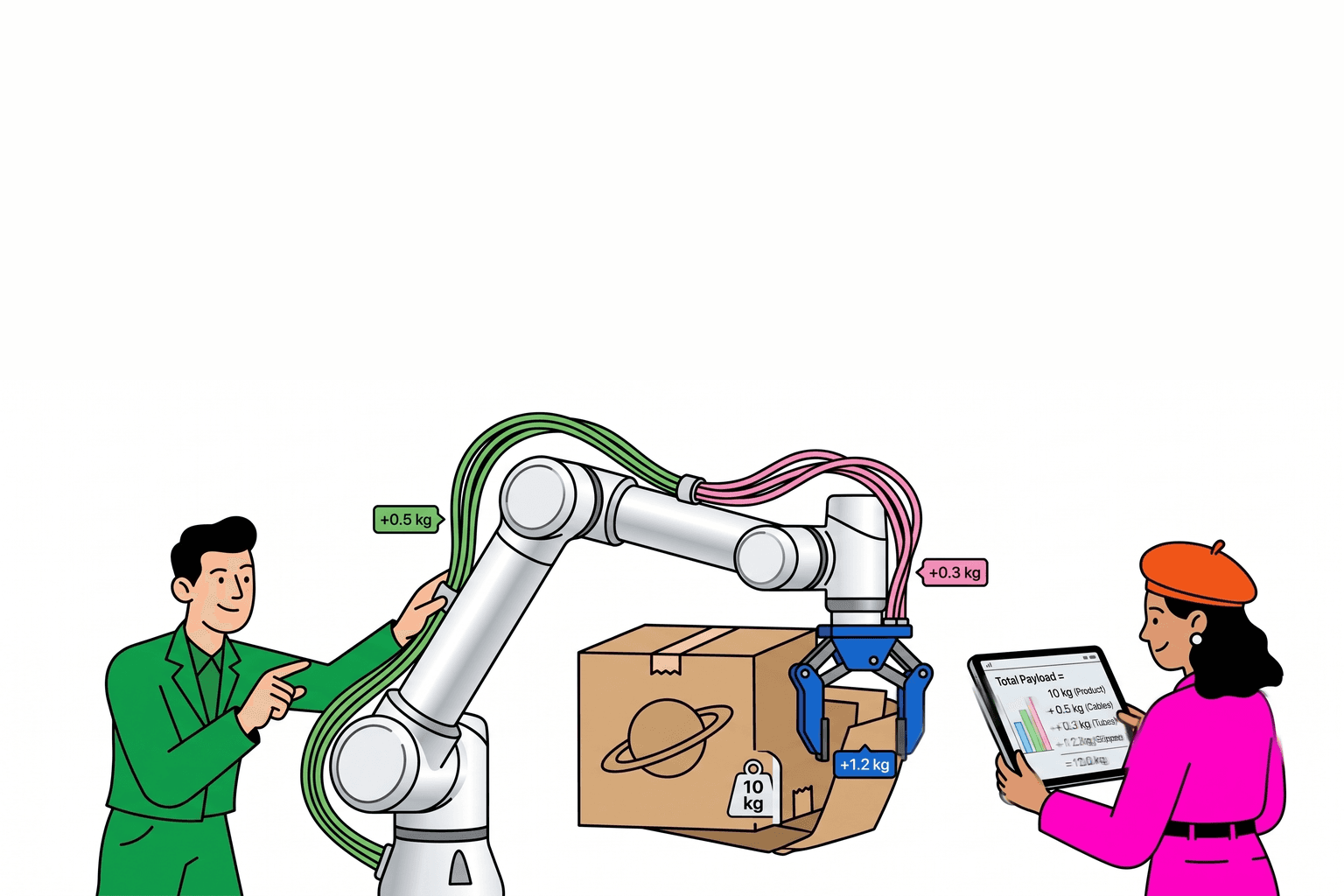
Payload: worst-case TCP, not tube weight alone. Empty/full rack + gripper or fork + adapter + margin. Method: Payload guide.
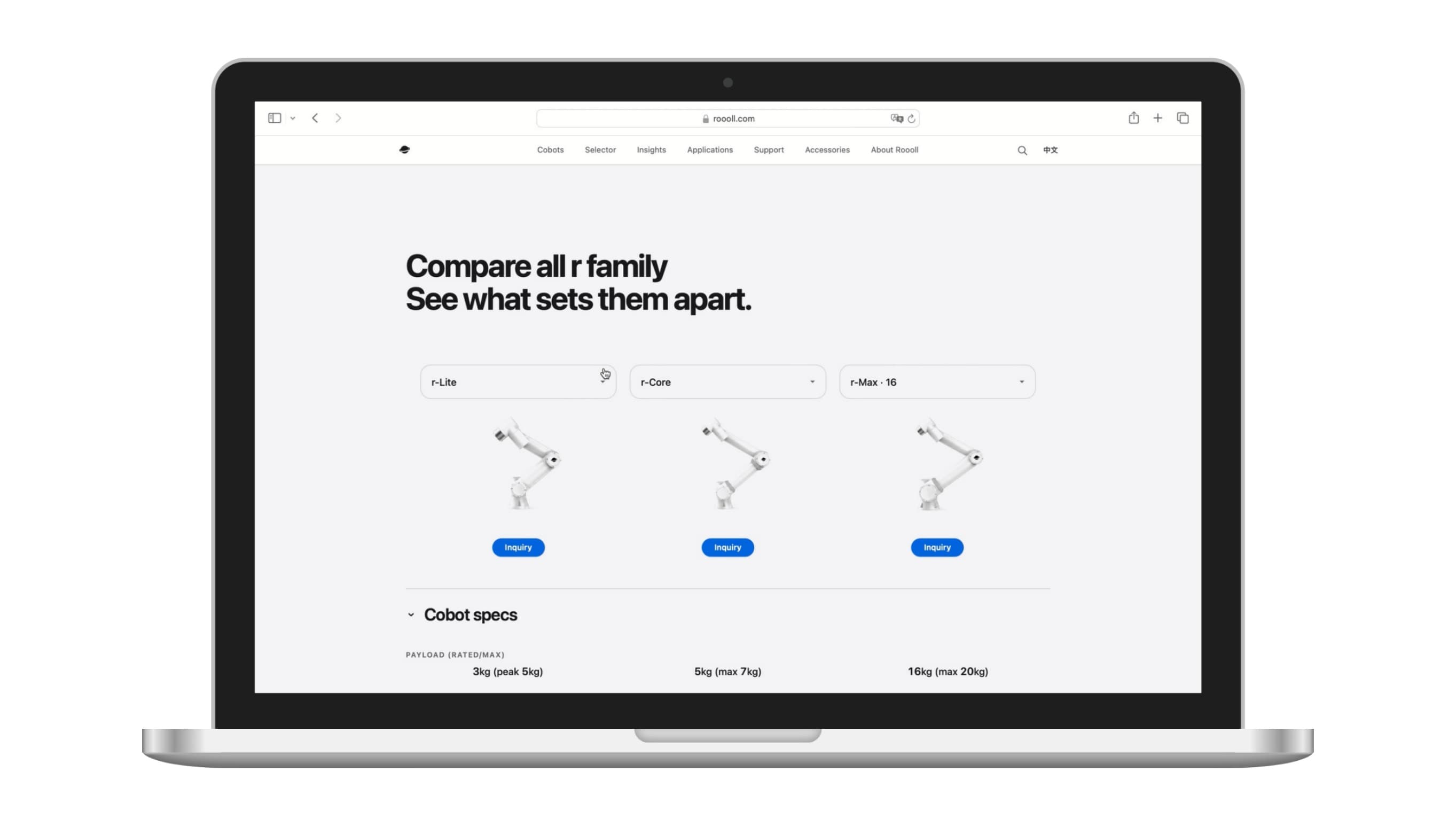
Light racks, standard microplates, single carriers — often 0.5–2.5 kg at the tool; start on r-Lite (~3 kg rated) and validate wrist pose at dock height and bench interference
Full racks, batched lidded tubes, metal carriers — totals may reach 3–4.5 kg; put r-Core (~5 kg rated) in Side-by-Side Comparison
Unless TCP lives at heavy rated load long-term — rack loading seldom needs r-Max or r-Ultra; that is bulk reagent or heavy handling—not routine rack bodies
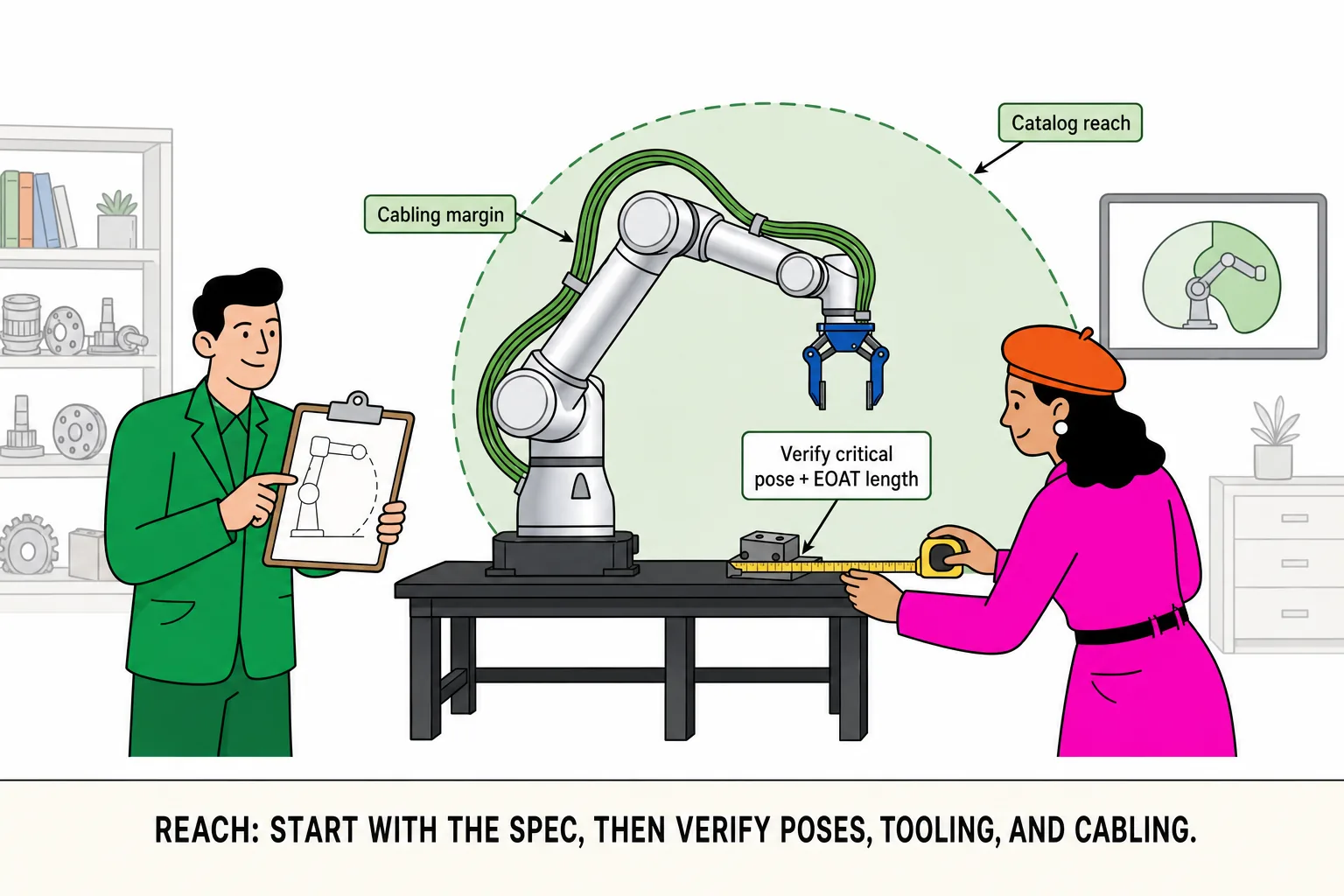
Reach: verify analyzer inlet depth and side clearance. Deep benches and inset inlets may exceed 622 mm rows; compare r-Lite mobile long-reach specs with r-Core’s ~922 mm tier. Method: Reach guide.
Two floor vignettes (illustrative—not a quote)
Vignette A — standard tube rack, single carrier ≤ 1.2 kg: tooling 0.4 kg → ~1.6 kg total. r-Lite rated margin is comfortable. Review focus: mixed rack locating and night-shift first-article ownership.
Vignette B — full metal carrier, 3.8 kg total: near r-Lite rated ceiling—compare r-Core seriously, not “peak lift once.” If the inlet is deep with lateral retract, check corner reach too.
Three ways rack-loading projects stumble
Mixed rack types assumed “one teach covers all.” Vendor height and handle geometry differ by millimeters—dock scrape follows. Rack SKU list should hit review before arm short-list.
Empty-rack demo, full-rack production. Center of gravity and tube overhang change accel and grip needs—trial at worst full rack, not best case.
LIS/analyzer handshake omitted from cycle time. Eight seconds of arm motion and twenty-five seconds waiting on ready—throughput lives at the interface, not catalog TCP speed.
When not to force collaborative rack loading
Random daily rack types with no controlled fixture
Specimen handling rules require human carry for entire open process
Takt needs a dedicated linear module on a 24/7 single-rack line
Analyzer inlet has no mechanical dock—every rack needs human micro-adjust
Integrator review checklist (rack loading)
| Check | What it tells you |
|---|---|
| Worst-case TCP (full rack + EOAT) | r-Lite vs r-Core rated margin |
| Rack SKU list + locating method | Mixed-line vision/fixture/guides |
| Analyzer dock pose | Full-rack corners and retract |
| LIS/instrument ready signals | Real takt vs arm-only demo |
| Biosafety and human roles | Who opens, verifies, handles exceptions |
| Night first article and audit | Production sign-off owner |