In vocational schools, undergrad robotics labs, and competition teams, pick-and-place, path tracking, and simple assembly demos repeat all semester. Time sinks are every group teaching a different path, discovery-night collisions, and rules demanding repeatability while the live run drifts. Instructors do not need “the most expensive arm”—they need archived, recoverable, gradable demo recipes while keeping hands-on teach and tune in the syllabus.
What a repeatable lab demo cell actually does
A typical teaching loop:
Brief and bounds — instructor sets demo goal, safety zone, forbidden poses
Teach or load — students teach or load instructor-approved baseline programs
Run and measure — repeat runs; log cycle time, accuracy, or task score
Iterate — change params/paths and compare; assess process, not unattended throughput
You automate repeatable demo motion and metrics—not “do the course for students.”
What you usually gain in the lab
Repeatable demo outcomes. Open house, dean visit, competition rehearsal—ten runs on the same recipe look alike; less “the arm is moody today.”
Teaching time on understanding, not firefighting. Baseline programs let students iterate from “runs” to “knows why.”
Clear safety boundaries. Speed caps, workspace limits, e-stop drills—belong in the lab manual.
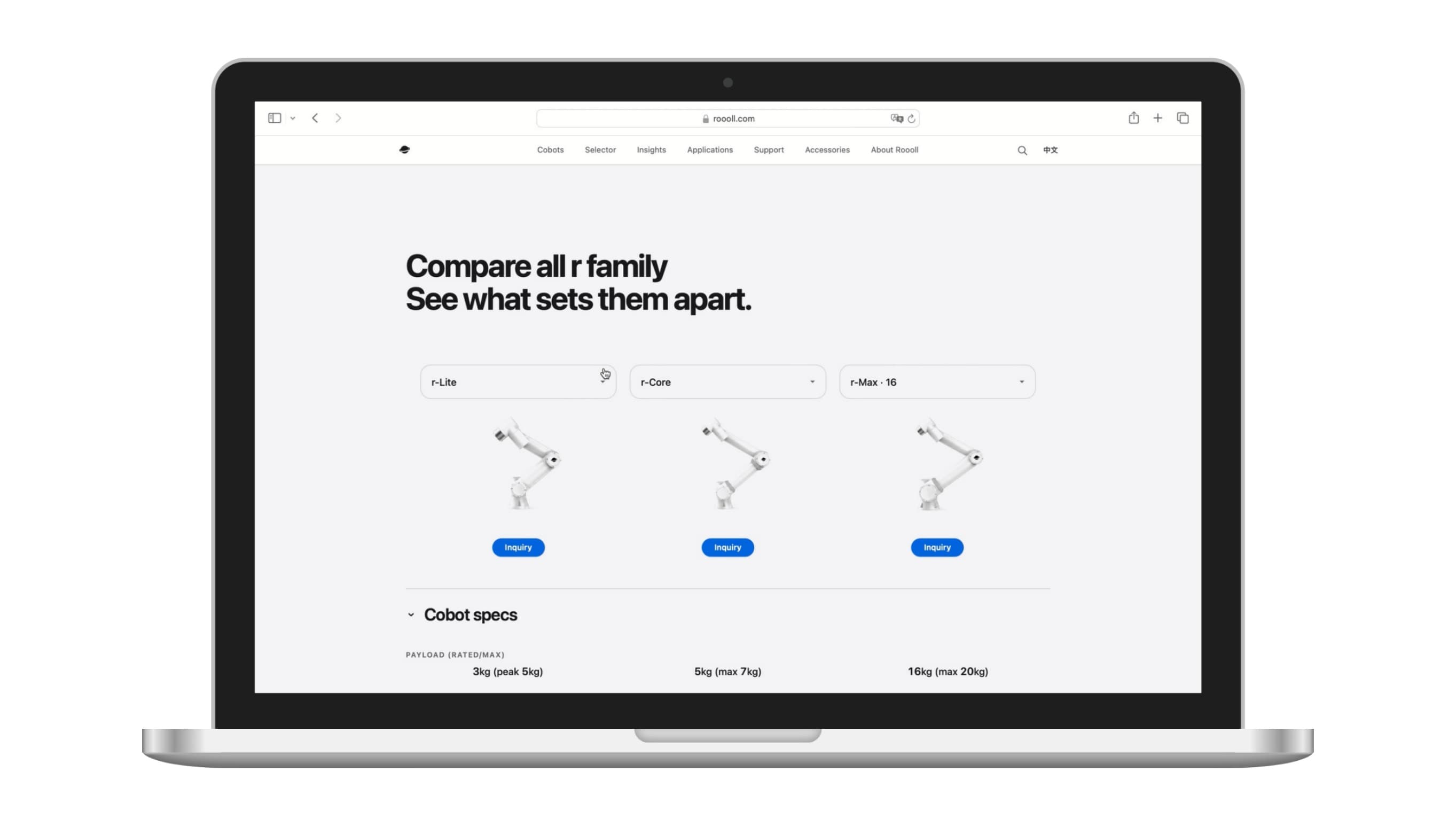
Bench-realistic footprint. r-Lite (~3 kg rated) suits intro benches and multi-unit labs; larger envelopes or slightly heavier fixtures compare r-Core (~5 kg rated).
Courses and competitions share hardware. Change programs, not whole machines—right for budget labs.
Payload and reach: teaching demos stay light
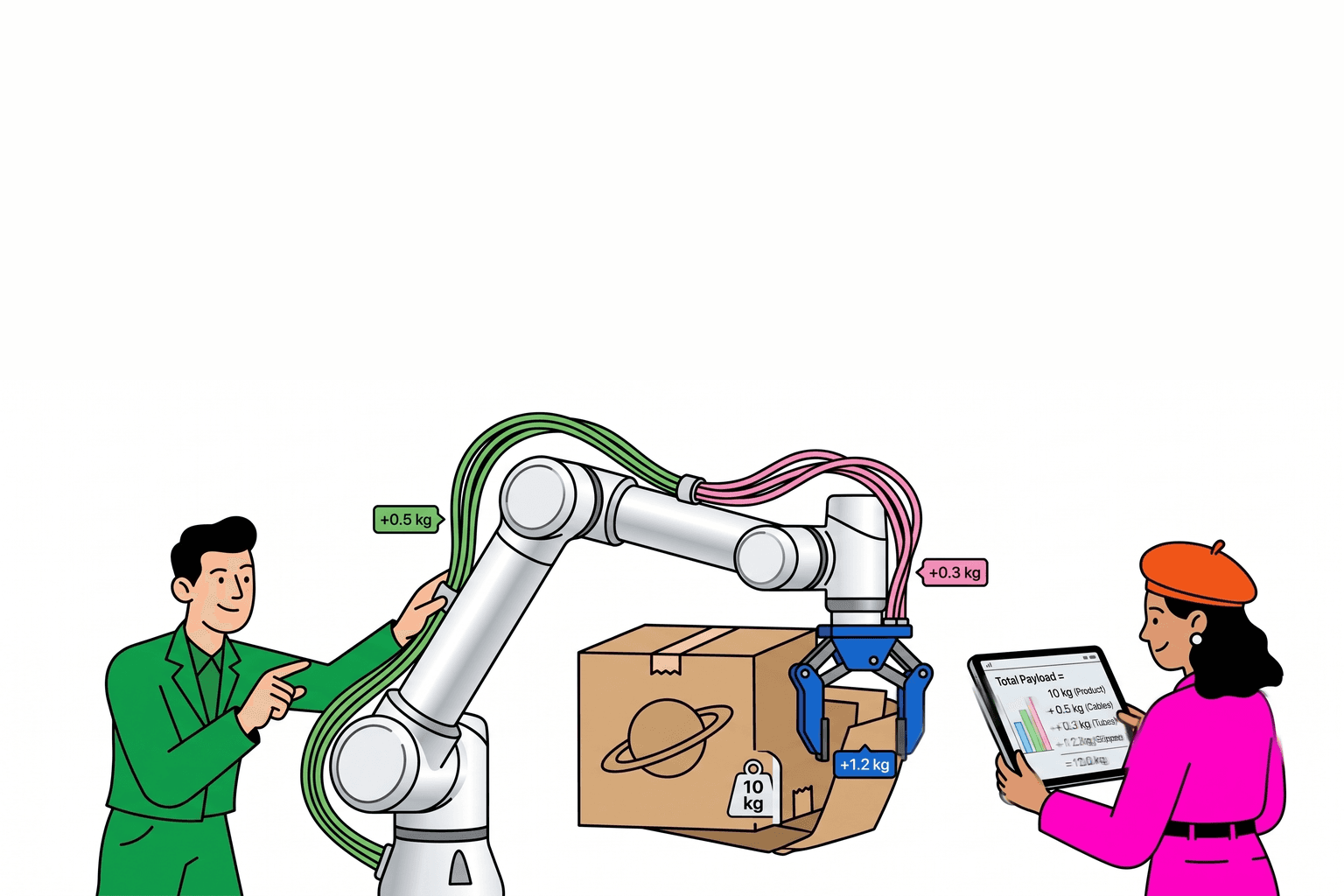
Standard grippers, teaching fixtures, light parts—TCP often 0.3–2 kg
Intro / multi-bench: r-Lite—integrated base saves space and cabling
Larger bench, span, or fixture: r-Core—still not r-Max/r-Ultra unless the syllabus explicitly teaches heavy logistics
Compare rows: Side-by-Side Comparison
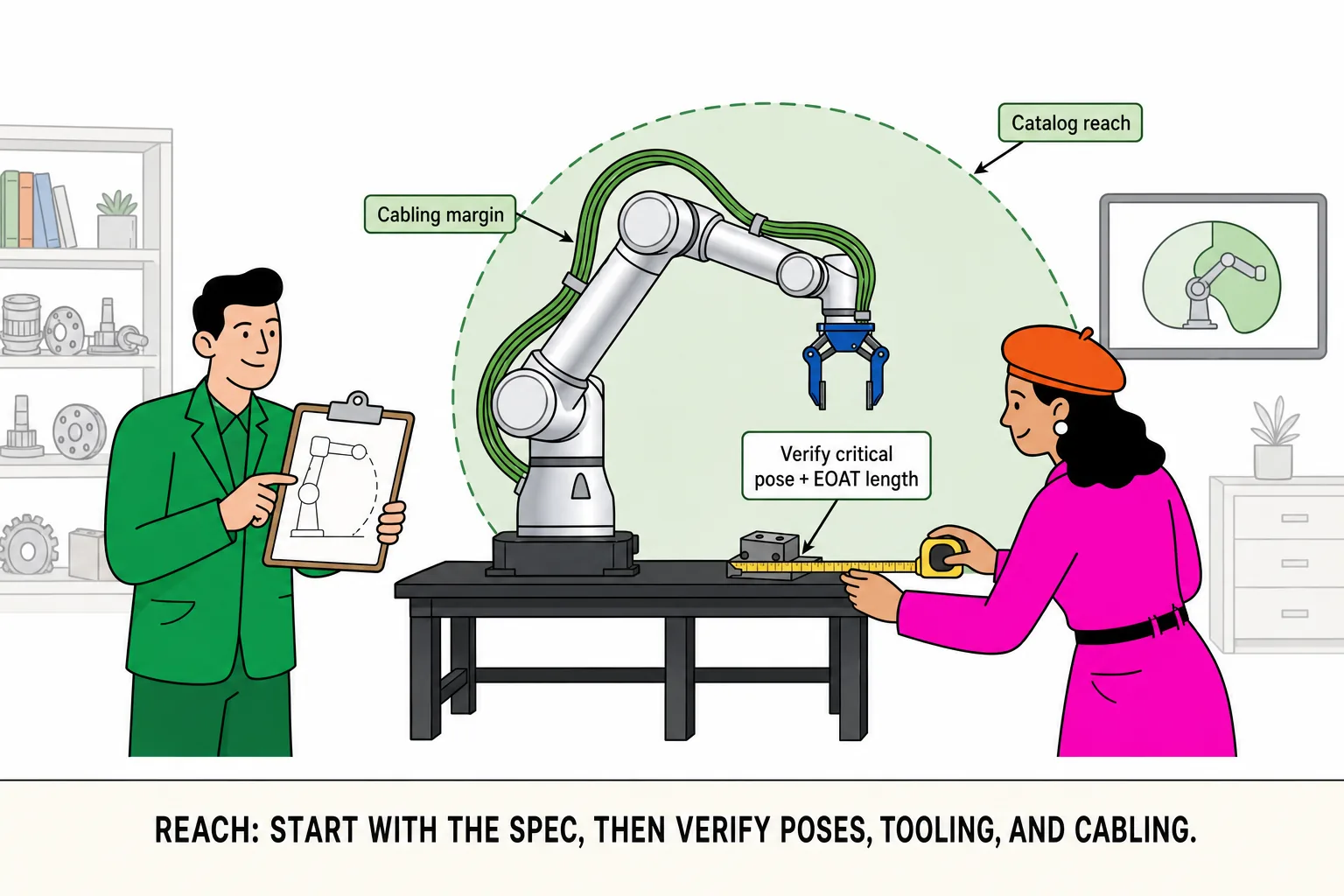
Reach math: Reach guide
Two floor vignettes (illustrative)
Vignette A — four intro benches, 0.6 kg gripper: r-Lite fleet. Review e-stop training, program versioning, admin rights.
Vignette B — competition bench, 2.2 kg fixture, long span: put r-Core in the set—not a heavy-tier arm.
Three ways lab demo programs stumble
No instructor gold copy—every session taught from scratch. Keep teach time, but maintain recoverable baseline.
IO/fixture changes competition week without regression. Freeze config lists before rehearsal.
Safety training as checkbox only. Collaborative teaching needs workspace, e-stop, and collision recovery drills.
When not to force “demo automation”
Course is theory-only with no hands-on outcome
Lab cannot guarantee supervision and basic safety training
Expectation is to remove all student teach experience
Tasks are fully random daily with no assessment baseline
Integrator review checklist (education demo)
| Check | What it tells you |
|---|---|
| TCP load and bench span | r-Lite vs r-Core |
| Instructor baseline and versioning | Gold copy owner |
| Safety zone and e-stop | Lab manual content |
| Student rights and logs | Recovery from mistakes |
| Course/competition changeover | Program steps |
| Multi-bench cabling | Lab management |