On milk-tea, coffee, and light F&B bars, recipe moves—dispense, pour, mix, seal—repeat all day. Peak-hour pain is not “we lack robots.” It is new hires drifting ratios, crossed traffic behind the bar, and no room for another dedicated machine without demolition. Owners fear “do we rebuild the counter?” A collaborative arm locks approved recipe motion (cup pick, ingredient order, stir path) into programs while staff stay on greeting, POS, exceptions, and sanitation—not an unattended gimmick.
What a recipe beverage cell actually does at the bar
A typical loop (varies by SKU and equipment):
Cup in — empty cup at the station (slot, conveyor, or hand load)
Dispense — recipe sequence triggers pumps/valves/hoppers or human top-up interfaces
Mix — taught stir or shake path when the process needs it
Hand off — cup to pickup; peak bottlenecks are often POS and manual top-up, not arm motion
You automate repeatable recipe motion—not “replace store operations.”
What you usually gain on the floor
Tighter recipe consistency. Cup fifty and cup two hundred follow the same ingredient order and stir path—guest complaints about “sweet today, flat tomorrow” sometimes trace to motion drift, not only scales.
Clearer peak traffic. The arm owns a fixed island; people stop fighting for the same counter depth on repetitive moves.
SKU changes often mean programs, not steel. Right for chains piloting one store with bounded menus.
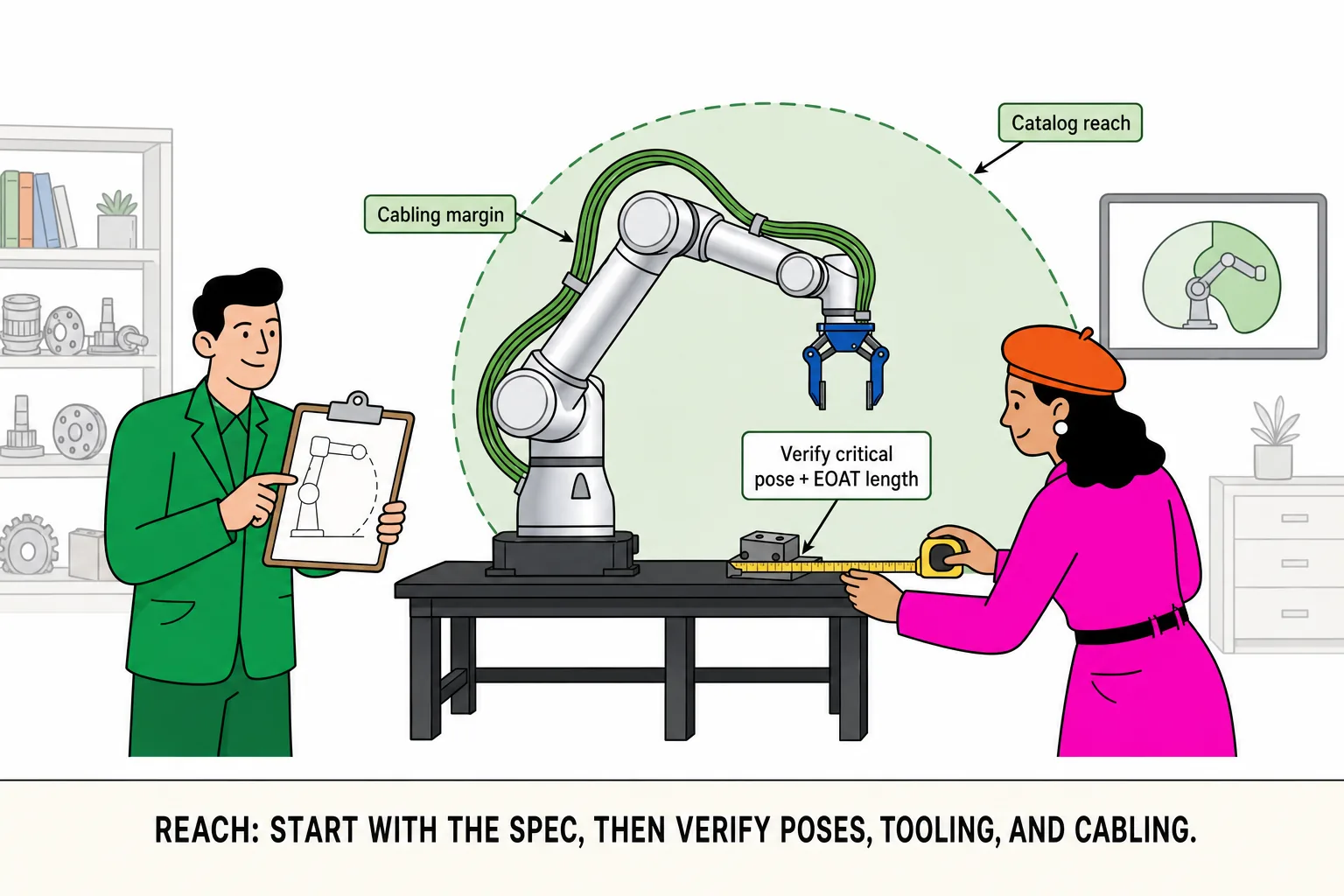
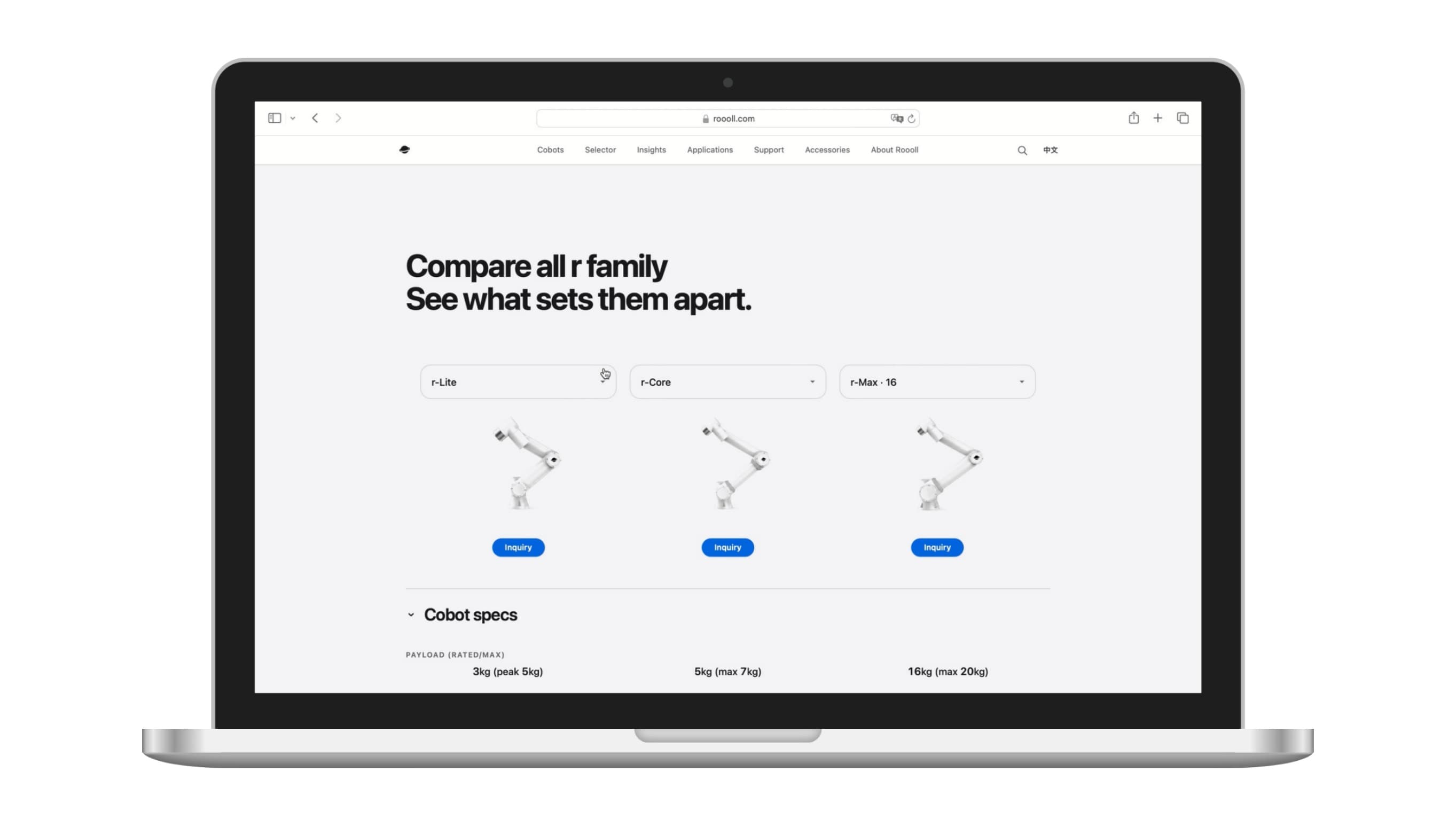
Compact mounts to existing counters. r-Lite (~3 kg rated) integrates the cabinet in the base—realistic on 600–900 mm deep bars; if tooling is heavier or reach must span multiple hoppers, compare r-Core (~5 kg rated).
Staff stay customer-facing. Ordering, topping exceptions, sanitation—these do not leave the shift plan.
Payload and reach: beverage prep is almost always light
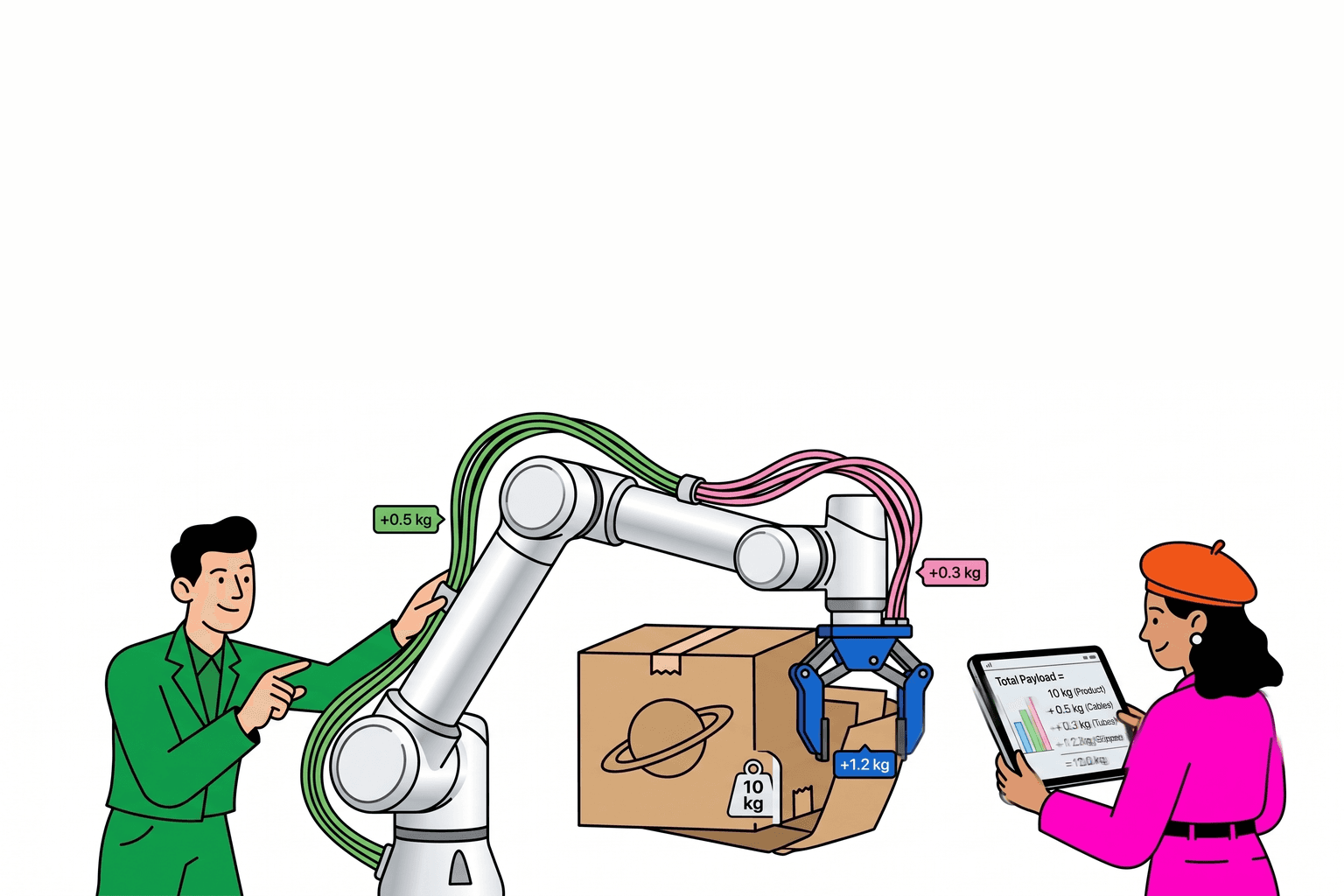
Cup nest, light gripper, small stir head—TCP often 0.5–2 kg
Start r-Lite—front-bar prep is light-load; size to r-Lite rated payload; compare r-Core when reach must span multiple hoppers
Short-list together: Side-by-Side Comparison
Cycle math: Cycle time guide. Layout: Workcell layout guide.
Two floor vignettes (illustrative)
Vignette A — single island, 0.9 kg cup nest: r-Lite is enough. Review cleaning/disassembly and peak manual top-up.
Vignette B — three-hopper span, 2.8 kg tooling: compare r-Core reach—not r-Max.
Three ways beverage pilots stumble
Low-traffic single-SKU demo; cleaning path tested only after opening peak. Sanitation and teardown time belong in takt ledgers.
Every ingredient assumed automatic. Fresh fruit, exceptions, stock-outs—need human takeover SOP.
Counter depth wrong; no home for the base. Validate envelope with photos or CAD before PO.
When not to force collaborative beverage prep
Daily chaotic SKU mix with no recipe structure
Food-safety audit forbids open-hopper proximity automation
Expectation is fully unattended trading hours
Takt needs dedicated multi-head fill lines on a 24/7 single recipe
Integrator review checklist (recipe beverage)
| Check | What it tells you |
|---|---|
| Worst-case TCP | r-Lite vs r-Core |
| Recipe count and changeover | Program time per SKU |
| Cleaning/disassembly SOP | In real peak takt |
| Manual top-up and exceptions | Rush-hour viability |
| Counter size and traffic | Base vs guest aisle |
| Food safety and audit | Materials and lubricants |