At mall and street scoop counters, cup/cone, scoop/extrude, topping, hand-off looks simple until you run a full shift: weekend rush wrist fatigue, condensation slipping the tool, and mid-day cleaning/disassembly killing rhythm. Owners ask about collaborative arms for “can we hold peak and still wash down tonight?”—not abstract reach. The cell locks repeatable pick-and-scoop paths while staff stay on greeting, custom requests, stock-outs, and sanitation.
What an ice-cream counter cell actually does on shift
A typical loop:
Vessel in — cup or cone at the station
Scoop/extrude — taught path for balls or soft-serve (depends on equipment)
Topping (optional) — fixed path or human top-up interface
Hand off — to the pickup window; real bottlenecks are often queue POS and cleaning windows
You automate predictable repeat motion—not “replace friendly service.”
What you usually gain on the floor
More consistent rush output. Ball size, extrude height, and placement drift less late in the shift.
Staff stamina for continuous service. The arm owns repetitive scoop paths; people handle orders, kid cups, special asks.
Flavor or vessel changes often mean programs. Right for counters with bounded SKUs and repeatable presentation.
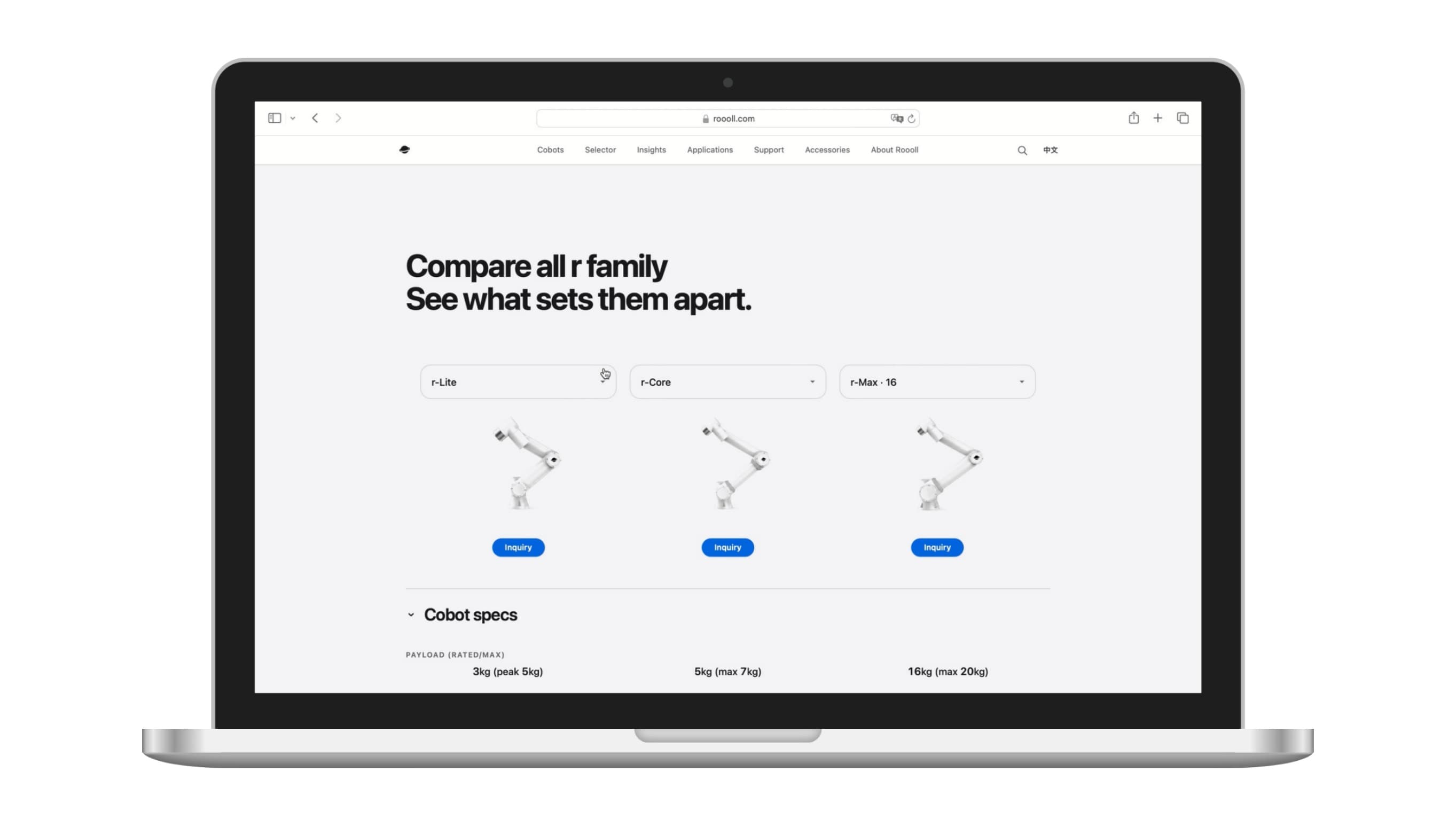
Footprint stays front-house realistic. r-Lite (~3 kg rated) fits tight behind display cases; slightly heavier multi-station tooling compares r-Core (~5 kg rated).
Cleaning belongs in design. Food-contact teardown time and frequency decide whether a full shift works—often more important than catalog cycle time.
Payload and reach: front-house scoop stays light
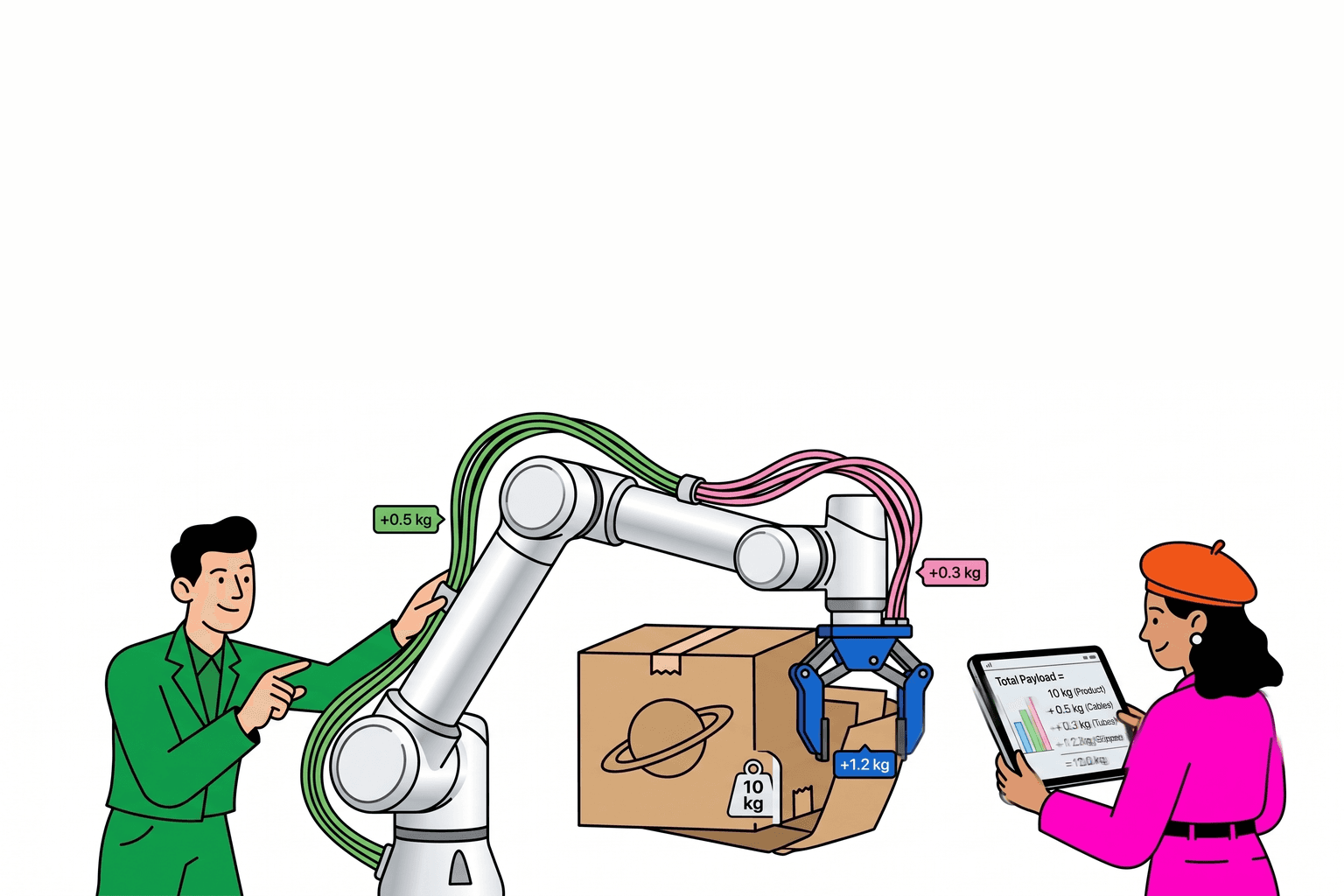
Cone/cup nest, light scoop tooling—TCP often 0.5–2.5 kg
r-Lite is often the default—scoop counters do not need r-Max/r-Ultra heavy tiers
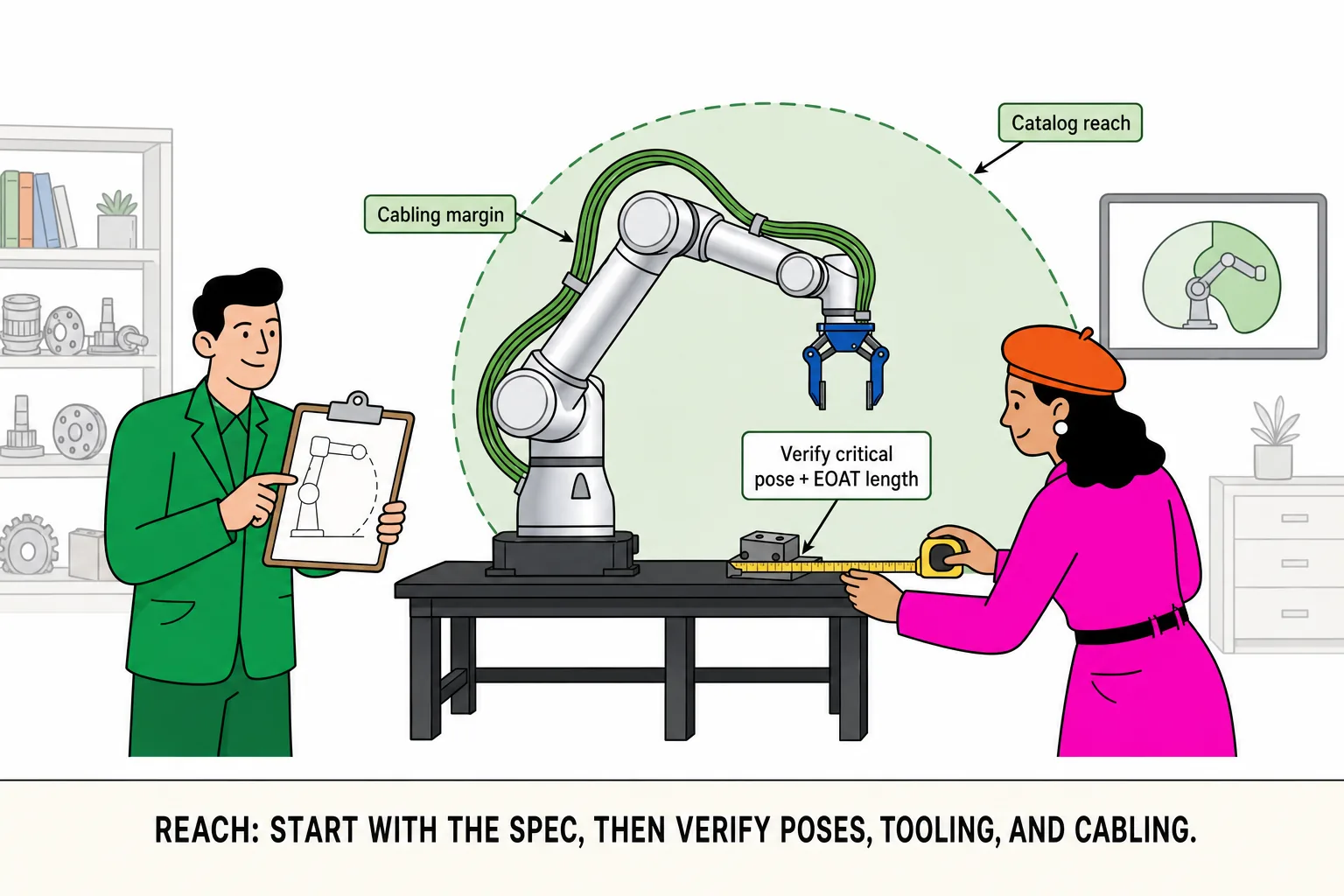
Motor-assisted tools or wide display spans compare r-Core ~922 mm reach
Short-list: Side-by-Side Comparison
Two floor vignettes (illustrative)
Vignette A — soft-serve extrude, 1.0 kg tool: r-Lite is enough. Review condensation, cleaning SOP, rush topping.
Vignette B — hard-scoop dual station, 2.6 kg: compare r-Core wrist pose—still not a heavy-logistics arm story.
Three ways scoop-counter pilots stumble
Demo on a quiet counter; cleaning tested only after opening weekend. Real shifts must book disassembly time.
Tooling ignores condensation and stick-slip. Food contact needs material and sanitation validation first.
Display traffic fights guest photos and queue lines. Plan island, glass case, and line together.
When not to force collaborative scoop automation
Daily chaotic menu with no repeatable motion
Food-safety audit forbids open scoop-zone automation
Expectation is zero staff on floor
Craft is purely artistic manual work with no repeat value
Integrator review checklist (ice cream counter)
| Check | What it tells you |
|---|---|
| Worst-case TCP | r-Lite vs r-Core |
| Flavor/SKU recipe count | Changeover steps |
| Cleaning/disassembly | Peak-hour breaks |
| Condensation and food-contact materials | Compliance |
| Queue flow and island | Guest experience |
| Manual exception SOP | Stock-outs, kid cups |