Quick answer
Read both digits: IP first digit = solids/dust; second = liquids—do not accept “dust-proof” as a verbal substitute
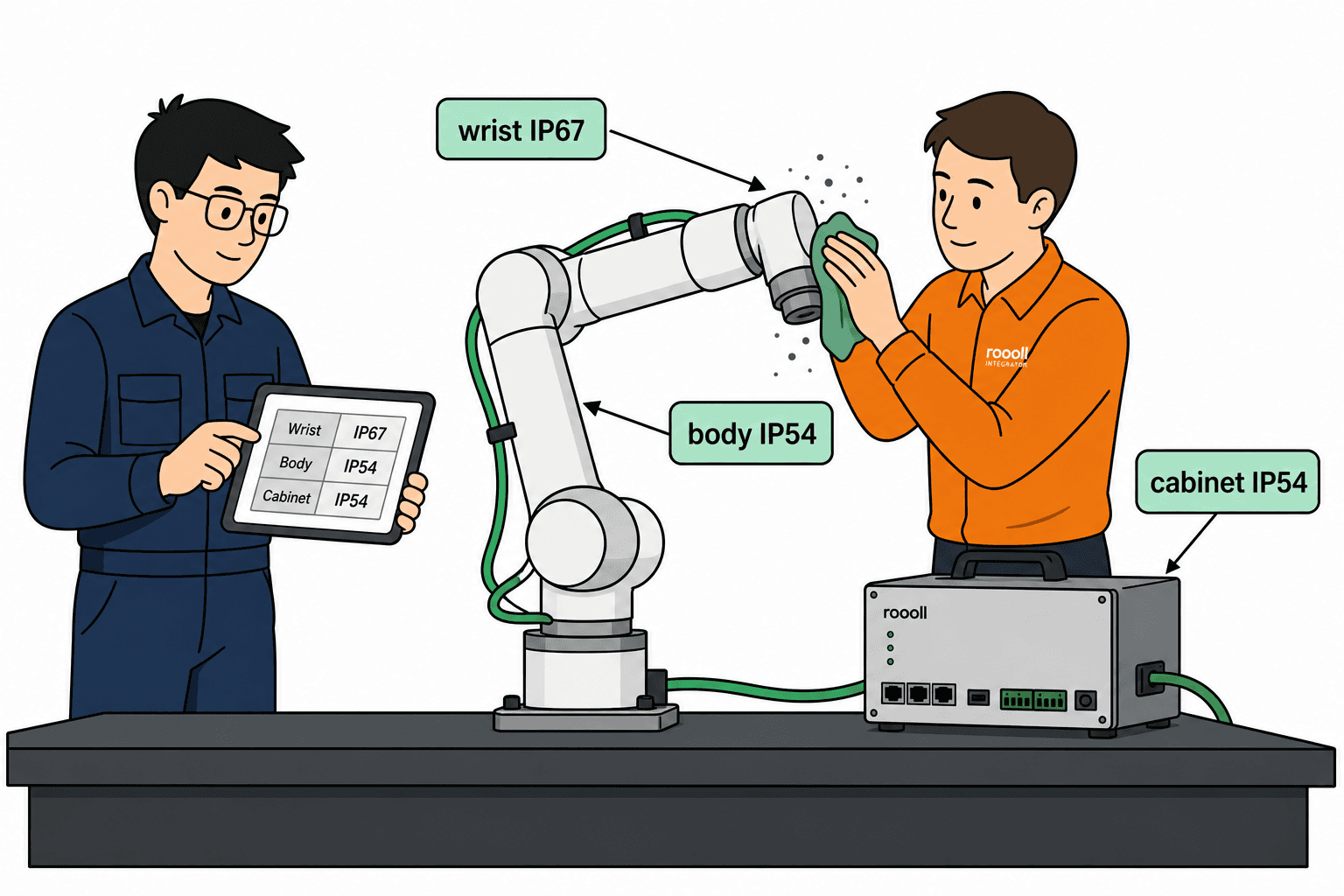
Split ratings are normal: wrist/forearm IP67, body IP54, cabinet IP54 is a common collaborative pattern—wrist IP67 ≠ whole-robot IP67
Dusty shops ask three things: particle type (dry / conductive / oil mist), whether joints sit in the dust cone, whether the cabinet shares that exposure
Coolant / washdown: specify liquid and whether pressurized rinsing hits the arm or cabinet; long immersion or washdown usually needs higher rating or local covers—not a slogan change
RFQ must demand: IP by assembly (arm / wrist / cabinet) plus a written dust or liquid exposure description—or quotes are not comparable
Dust, oil mist, and coolant hit wrist seals, cable jackets, and cabinet intakes long before they show up on a payload brochure. Cobot IP rating is whether joints and cabinets stay reliable under solid/liquid ingress. Misread the split rating and day-shift demos pass while week-three dust trips begin.
How to read the two IP digits
IP coding follows the IEC 60529 idea of enclosure protection (industry explainer: Robots Done Right · Robot IP Rating):
| Digit | Meaning | Shop question |
|---|---|---|
| First (solids) | Foreign objects / dust | Dry chips, grinding dust, packaging powder blowing on the arm? |
| Second (liquids) | Drips / spray / short immersion bands | Coolant splash, rinse, high humidity? |
Bands you will see on collaborative arms (always confirm the datasheet):
| Mark | Solids intuition | Liquids intuition | Common misread |
|---|---|---|---|
| IP54 | Limited dust ingress | Splashing water | “Dust-proof” sold as dust-tight |
| IP65 | Dust-tight band | Low-pressure water jets | Treated as pressure-wash or immersion |
| IP67 | Dust-tight band | Short immersion band (per maker test) | Treated as permanent submersion or pressure wash |
| IP68 | Higher liquid product band | Maker-defined continuous conditions | Ignoring “not for long-term underwater” notes |
| IP69K | Dust-tight + hot high-pressure wash (mostly food/pharma) | Cleaning-process intent | Defaulting a dusty machine shop to IP69K—wrong intent; food washdown is a different RFQ |
Split assemblies: wrist, body, cabinet
Major cobot lines often publish separately. FANUC’s CR-35iB lists body standard/optional IP54 and wrist & J3 arm IP67 (FANUC Europe CR-35iB). Other makers ship higher full-arm series for harsh dust/humidity/oil (e.g. DOBOT CRA-IP68, product page, with stated test limits).
Published split examples (always re-check the current datasheet—this table shows *how to read*, not a bid sheet):
| Example (public wording) | Body / arm | Wrist or tool end | Cabinet (typical) | How to use |
|---|---|---|---|---|
| UR e-Series (e.g. UR10e sheets) | Often IP54 | Same band as arm (not a “wrist-only IP67” story) | Often separate / lower | Fine for light dust; direct dust cone → covers or a higher-protection line |
| FANUC CR-35iB | Standard/optional IP54 | Wrist & J3 IP67 | Spec separately | Classic “high wrist, mid body” split |
| DOBOT CRA-IP68 class | Higher full-arm series | Follows series | Check options | Harsh dust/oil candidate; read non-submersion limits |
Force the quote into three lines:
Arm body IP
Wrist / tool-side IP (including tool-flange sealing)
Controller cabinet IP (many cabinets remain about IP54—when cabinet and arm share a dusty bay, the cabinet often fails first)
Dusty workshops: when IP54 is enough
Dust failures are rarely about buying an “IP67 sticker.” They are about which path particles take into joints, fans, and connectors. In one bay the door-side wrist can sit in a dust cone while the cabinet hangs on a cleaner side of a partition—that is exactly why split ratings exist.
| Exposure | Typical approach | Still write into the RFQ |
|---|---|---|
| Light settling dust, arm outside the dust cone | Body IP54 + higher wrist often starts | Cabinet intake filtration, cleaning interval, who cleans |
| Dry cut/grind dust blowing on door-side wrist | Wrist IP67 or local cover; avoid dust-pocket poses | Whether blow-off is in takt; who supplies and accepts covers |
| Conductive / metal dust | Raise protection + electrical/cleaning plan—not a verbal “dust cover” | Isolated or pressurized cabinet; grounding and clean-down |
| Oil mist + dust | Spec liquids and seals together | Cable jackets, connector orientation, mist on the flange |
A shift photo beats adjectives: is dust a burst when the door opens, or a continuous grind cone? Does the arm park for long stretches in a “bowl-up” pose that traps powder? Does the cabinet intake face the return airflow? CNC tending must put chips and coolant on the same risk sheet (CNC tending guide)—IP class, blow-off path, and cable dress are one decision table, not three unrelated POs.
Liquid and “washdown” boundaries
The second digit covers liquid scenes, but shop slang for “we can wash it” is often harsher than the lab test.
Splash/mist — Match the second digit to your liquid and angle. A 10–20 s door-side clip or a photo with scale beats writing “heavy oil mist” when you want a defensible split-IP answer.
Floor wash at shift end — Many failures are not coolant from the tool; they are puddle splash onto the base and cabinet fans. Confirm whether water hits intakes; move or cover the cabinet if needed, and state whether floor wash is in scope.
IP67/68 claims — Read the maker’s test notes and limits. DOBOT’s IP68 page references IEC 60529-related testing and warns it is not for long-term underwater use—do not expand that in your RFQ into “pressure-wash line approved” or “soak cleaning OK.” Short immersion band ≠ wash process license.
Raising IP from 54 to 67 does not replace a written risk assessment for people beside the cell. Collaborative deployments still often reference ISO 10218 / ISO/TS 15066—interlocks and speed limits: Safety & I/O guide. Protection is about ingress and uptime; the safety file is about how the cell stops when a person is there and who signs it.
Fields to demand verbatim in the RFQ
Paste the six lines below into the RFQ attachment and require line-by-line “included / option / not offered”—not a single sentence that says “dust-proof robot.”
Split IP — body / wrist (including whether tool-flange sealing is counted) / cabinet, each with rating and test basis.
Upgrade package — if a foundry, dust, or sealing kit exists, list covers, seals, lead time, and impact on mass/envelope.
Allowed environment — temperature, humidity, dust description (dry / conductive / oil mist), coolant splash yes/no; attach photos or a short video link.
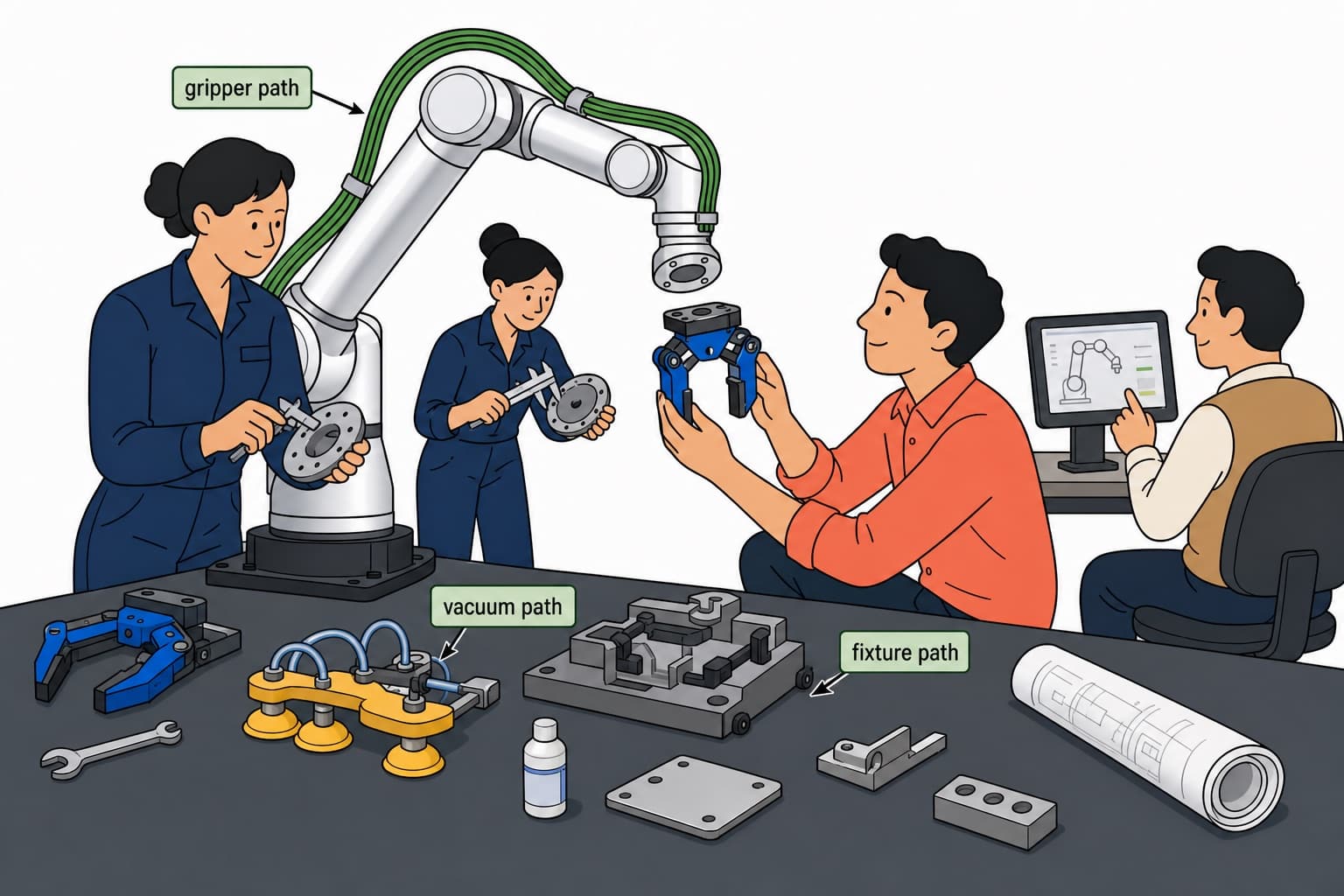
External lines — jackets, cable trays, connector orientation, and who supplies/installs accessories when tubes run outside the arm.
Cleaning and maintenance — suggested clean-down after dust or liquid ingress, seal replacement interval, effect on calibration.
Tool-side break points — whether valves, cameras, grinders, or flange extensions break the original wrist seal; if yes, who issues the new protection statement. EOAT: end-effector guide.
Selection moves
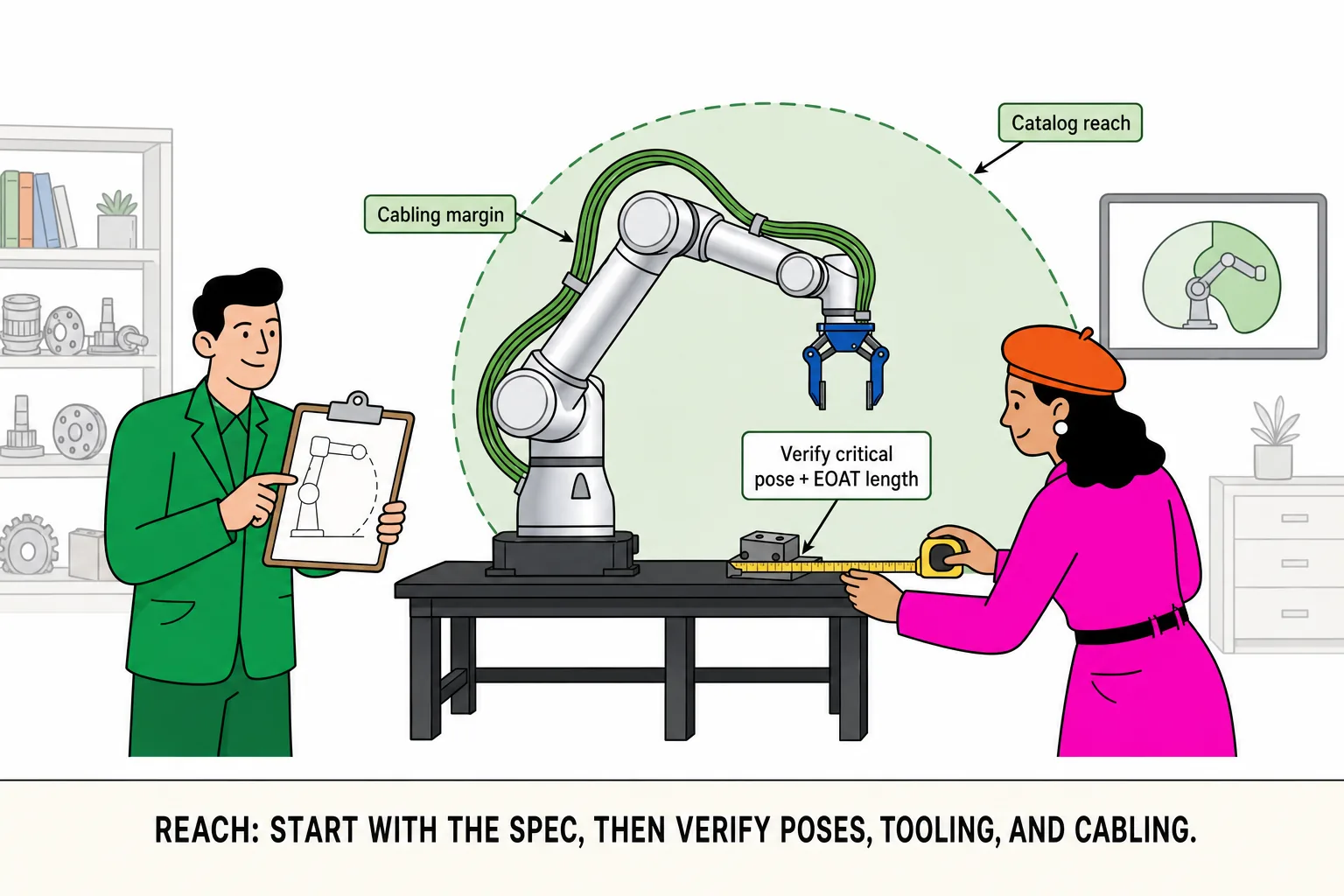
If the environment write-up is still fuzzy, do not lock “must be full-arm IP68” first. Narrow payload and reach in Product Advisor, confirm notes and mass in Side-by-Side Comparison, then use true-scale AR to see whether the cabinet can sit outside the dust cone—moving the cabinet two meters often beats buying one more IP digit on the wrist. Full inquiry fields (takt, I/O, acceptance): cobot RFQ checklist.
Common failures
Buying the wrist-IP67 headline — cabinet stays open in the grind bay; by week three the intake filter is packed and nuisance faults rise while the arm still “moves.”
Treating IP67 as pressure-wash permission — end-of-shift hose hits connectors and base; motion continues for a while, seal and electrical damage show up later.
Field mods that break seals — holes cut for a grinder or tube, jackets trimmed, no updated protection note or TPM interval—warranty and ownership blur immediately.
No cleaning interval in dust season — months one and two look fine; month three protective stops climb while the debate stays on “arm quality” instead of dust in intakes and joints.