Quick answer
Definition: a cobot carries a sanding/polishing tool and holds target contact force or compliance along a path for deburr, grind, or polish
When it beats manual: repeating curves, costly end-of-shift drift, high dust/vibration exposure, force control that locks removal rate
When not: surface standards that only live as “master feel,” one-off artistry, or heavy continuous stock removal on a dedicated machine
Named public cases: UR · Andrew Pearce cites ~+40% finishing throughput and ~2-month payback; OnRobot car-panel polish example cites ~1.5 years; UR application pages also narrate Paradigm polish ~+50% throughput
Read with: End-effector · IP · Safety · ROI
Manual finishing rarely fails because people “cannot sand.” It fails after hour N when force drifts. Cobot sanding wins on repeatable force–speed–path, not brochure sparks. Ask first whether you have a measurable surface standard (Ra, gloss, color band) or only “like the master.”
Why force control beats “position only”
Pure position paths overcut or under-sand when part tolerance or fixture micro-shift appears. Force/torque control or passive compliance lets the tool “float” on the surface normal and hold contact force—stabilizing removal rate and texture. Process notes (including PushCorp-style literature) treat force consistency as removal, finish, and abrasive life together—not a brand magic trick.
Freeze three acceptance items: target force band, feed rate, abrasive spec. Drift any one and the surface drifts. Do not stop at one perfect demo; watch force traces and abrasive state across 30–50 parts.
Manual vs cobot (decision table)
| Signal | Leans cobot sanding/polish | Leans keep manual or dedicated |
|---|---|---|
| Geometry | Repeating curves/edges, teachable path | High artistic variance every part |
| Quality | End-of-shift color/over-sand costs money | Master already stable, tiny volume |
| Ergonomics | Vibration, dust, forced posture | Short light duty, low exposure |
| Stock removal | Finish / polish / light deburr | Continuous heavy grind, large stock |
| Changeover | Weekly recipe changes | Year-stable dedicated cell cheaper |
Dust, IP, and cell protection
Sanding dust enters joints and cabinets. Put IP rating, positive pressure, local extract, and cleaning intervals in scope—not as a post-acceptance cover. Dusty-shop context: IP guide. Cells beside people still need rotating tools, flying grit, and noise in the assessment—“force-limited arm” does not stop a wheel edge.
At minimum in the SOW: extract capture points, cleaning interval, enclosure rating, whether dust sensors alarm-stop. Skip those and a gray cabinet three months later will erase brochure payback.
EOAT wear and an honest consumables ledger
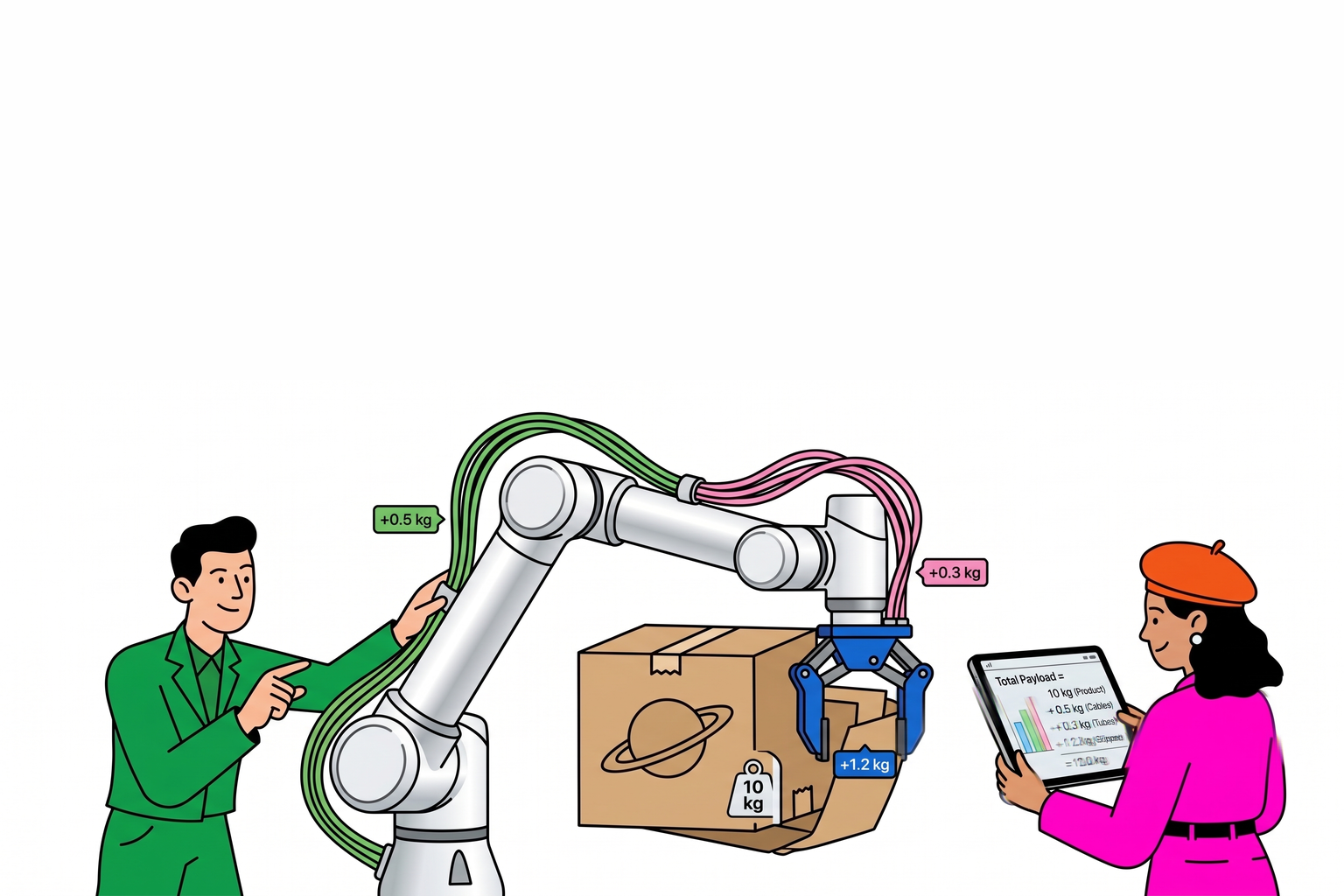
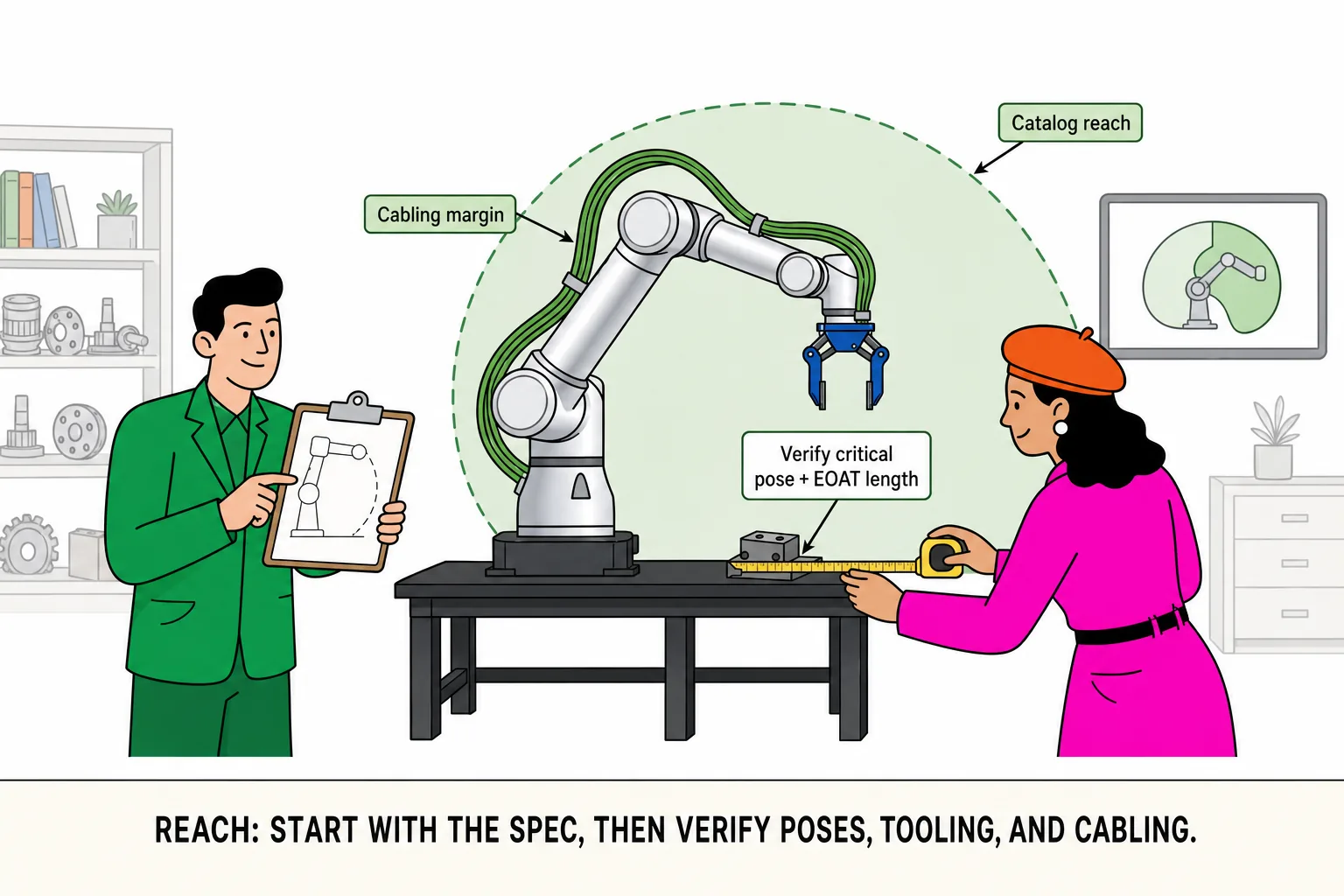
Discs, belts, and wheels are consumables. Too much force burns abrasives; too little stretches the cycle. Put spindle/sander cost, consumable per part, change downtime, and spare path into Year 0/Year 1. Subtract tool mass and eccentric vibration from payload and reach—End-effector.
Do not stop the gain sheet at “replace one sander.” Add consumable × annual volume, abrasive-change downtime × shifts, and scrap from over-sand. Public cases span ~2 months (Andrew Pearce) to ~1.5 years (panel polish)—the spread itself means re-run on your plant numbers.
When a dedicated finishing cell wins
Continuous automotive panel polish lines, heavy belt stands, or high-volume enclosed dust cells often favor industrial dedicated machines or gantries. Cobots fit mid/low volume, high mix, and people still loading a finishing island. Class split: Cobot or industrial.
How to talk payback honestly
Use the same sheet as the ROI guide, but prioritize quality stability (less rework), ergonomics/absence, and throughput on the gain side. Year 0 includes arm, force/compliance EOAT, extract, fixtures, integration, and safety assessment. Published +40% / +50% throughput is named-story framing, not a contract default.
Pilot order (in the SOW)
Freeze measurable surface standard and the force/speed/abrasive triple
Teach one part family; run 30–50 parts with force and surface checks
Put dust/IP measures in place before stretching the shift
Changeover: re-accept after abrasive or part swaps
Safety assessment covers rotating tools and grit—Safety & I/O
Shortlist models with Comparison / Product Advisor; stiffness and reach often matter more than a max-payload number for overcut risk.