“Bought the wrong robot” sounds like a procurement failure. Most of the time everyone in the room was competent—payload tables reviewed, competitor rows compared, demo videos watched. The failure is not attitude. The question slipped. The floor needed relief from repeat labor, a takt gap, or painful changeover. The charter often said “get automation,” “keep up with the industry,” or “buy one and see.” Once the question slides, every correct parameter comparison aims at the wrong target.
Evidence: why “arm-only” comparisons lead to wrong buys
| Cost item | Published range / what it implies | Source |
|---|---|---|
| Robot hardware (system hardware) | ~25–40% | AMD Machines |
| Integration engineering | ~30–50% | AMD Machines |
| EOAT (end-of-arm tooling) | $2k–$40k+ | Robolist TCO model |
| Integration engineering (scale) | $8k–$60k | Robolist TCO model |
Buying the arm that looks most like a robot
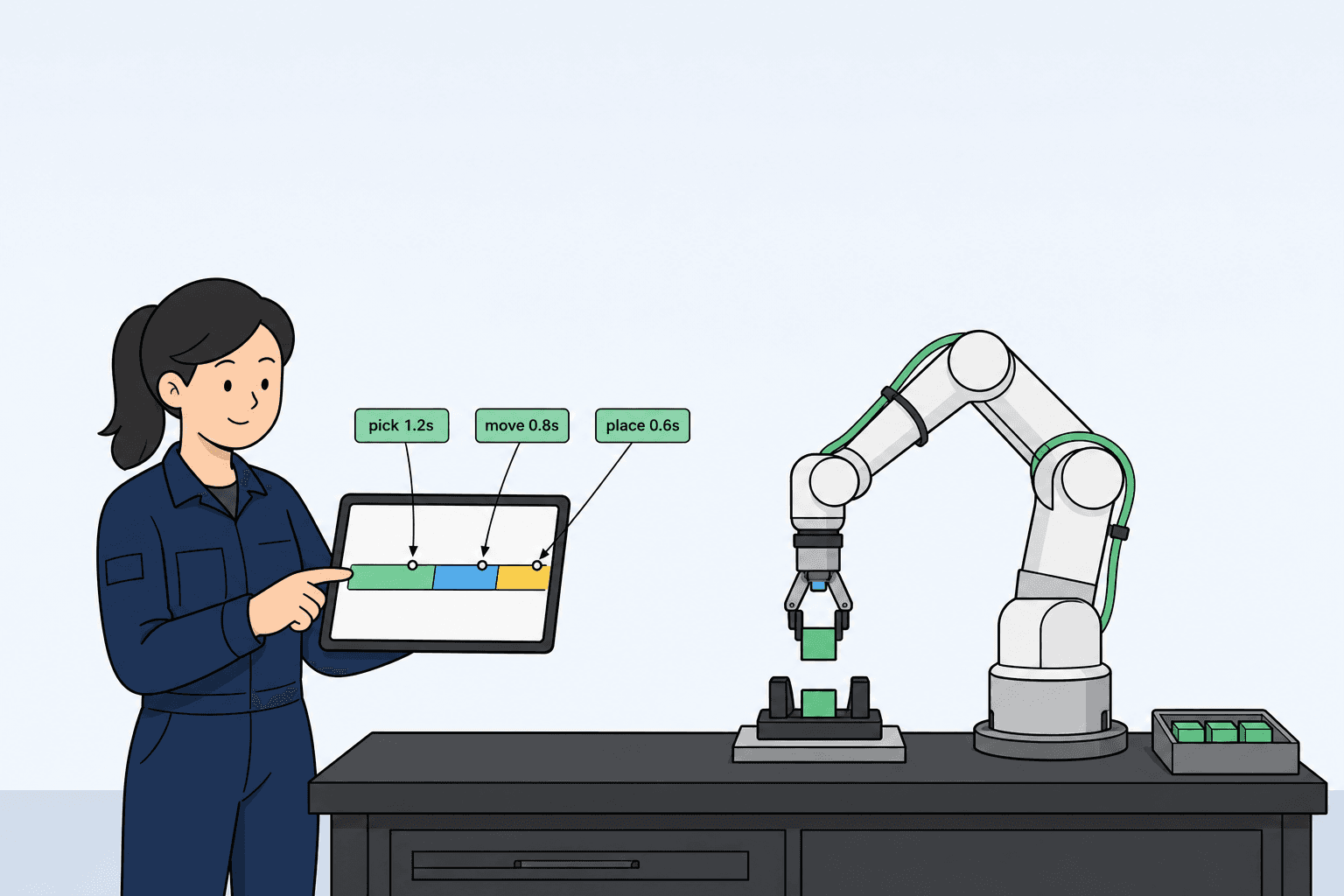
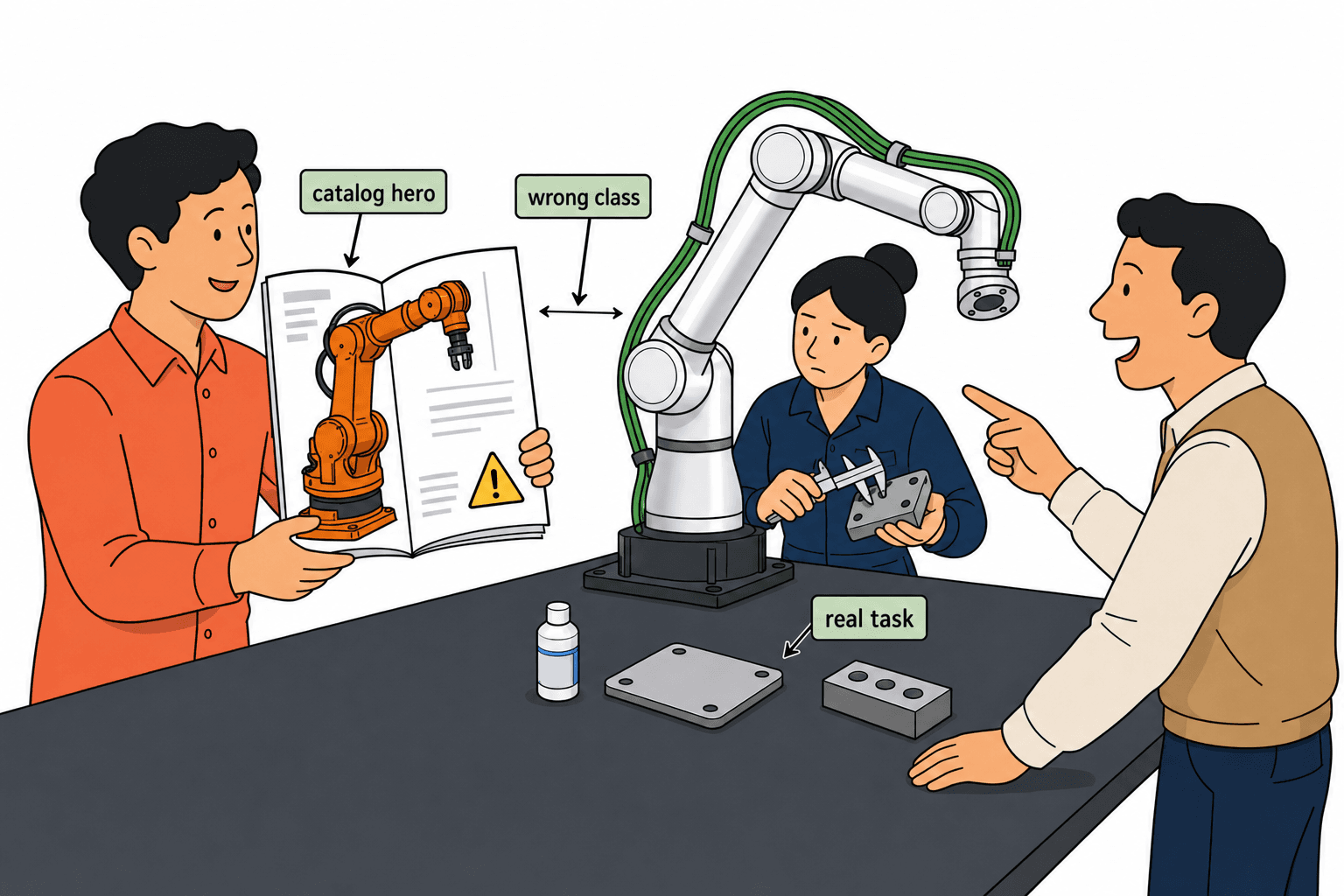
Cages, big orange arms, hard-takt footage photograph well and win the meeting. If your line still needs people inside the cell for changeover, loading, or inspection, every door cycle eats the takt win. The mirror image is just as common: skip the fence, force extreme takt onto a cobot, leave no room for a person—protective stops become the shift.
Collaborative versus industrial is not a morality test; mismatch with the floor is. For the class split → Cobot or industrial robot arm — which should you choose?.
The arm is fine; the hand and the task are not
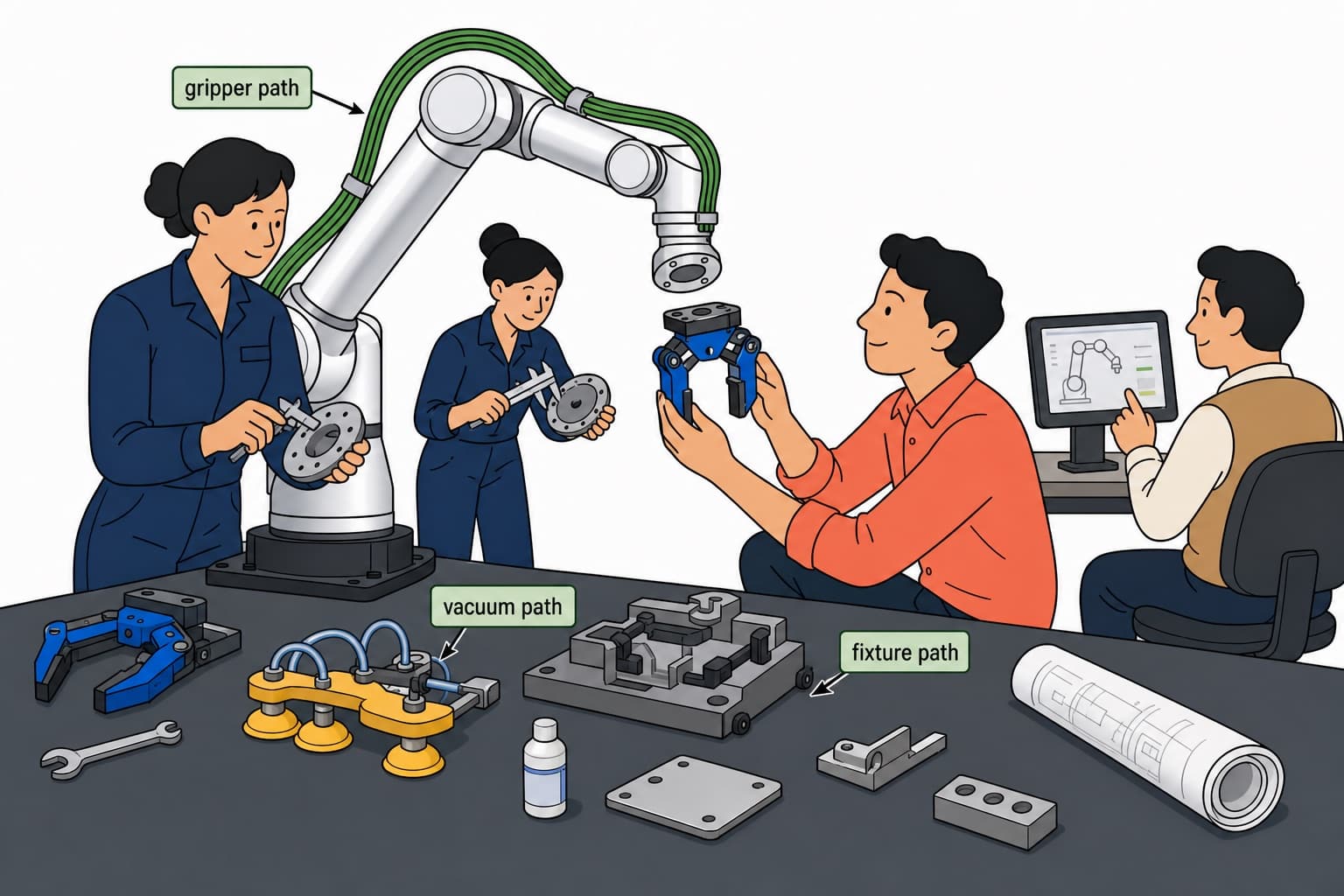
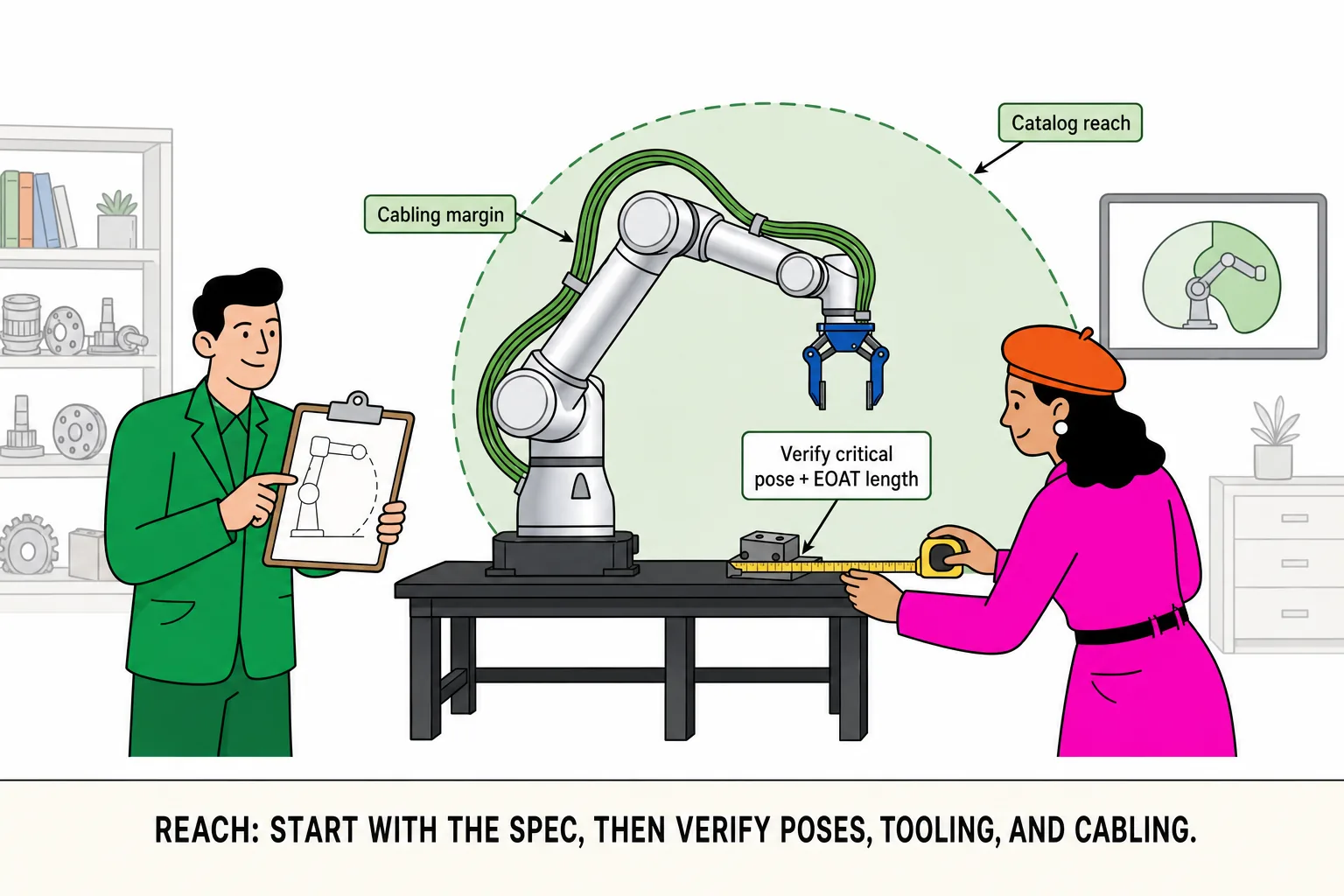
The quote carries a cobot with enough rated payload; after delivery, gripper, vacuum, fixture, and cabling blow through TCP—or the key pose misses by fifty millimeters. The datasheet did not lie. Procurement treated part weight as system payload. Payload, reach, and end-effector guides share one language: worst case, not catalog peak.
Another variant locks a model before the task is ready—incoming tolerance drifts, takt is vague, exceptions live in a senior operator’s hands. A good arm then automates the mess. Ask the task first → task readiness; checklist version → common selection mistakes.
The demo won trust, not constraints
Empty grips, master blocks, perfect lighting—everyone nods. Back on your incoming parts and peak shifts, the cycle will not stand. That is not slick sales; it is acceptance that never required your worst part at your takt. How to run demo day as a decision day → How to run a cobot demo day.
The bill often arrives in year two
Wrong buys rarely explode at unboxing. More often: station one was a showcase, ROI looks long, automation loses the budget call; or the pilot demos forever and never enters the schedule—the arm capitalized, the person still on the job. Hardware can be fine when the sample is wrong → Why the first station is often the wrong one · Why pilot stations stall.
If you suspect a wrong buy, ask three cheaper questions first
Do not start by switching brands:
Is this arm removing last year’s most painful repeat labor?
Are worst part and worst shift on the proof list?
If the demo can only wave empty air, will you still sign?