Quick answer
Two ledgers: arm list price ≠ full-cell landed cost (EOAT + integration + safety + training + OpEx)
Arm bands: value/China-tier often ~$6k–$25k; mainstream Western cobots often ~$25k–$72k (rises with payload)
Full-cell bands: simple pick-place / self-integrate often ~$35k–$75k; vision/multi-station ~$70k–$130k; complex multi-robot/ERP ~$120k–$250k+
Shares: published TCO often puts hardware at ~25–50%; some deployment write-ups put the arm at ~50–70% of cash outlay—depends on self-integration and EOAT
Payback: single-shift often ~12–24 months, multi-shift ~8–14 months—verify on your hours → ROI guide
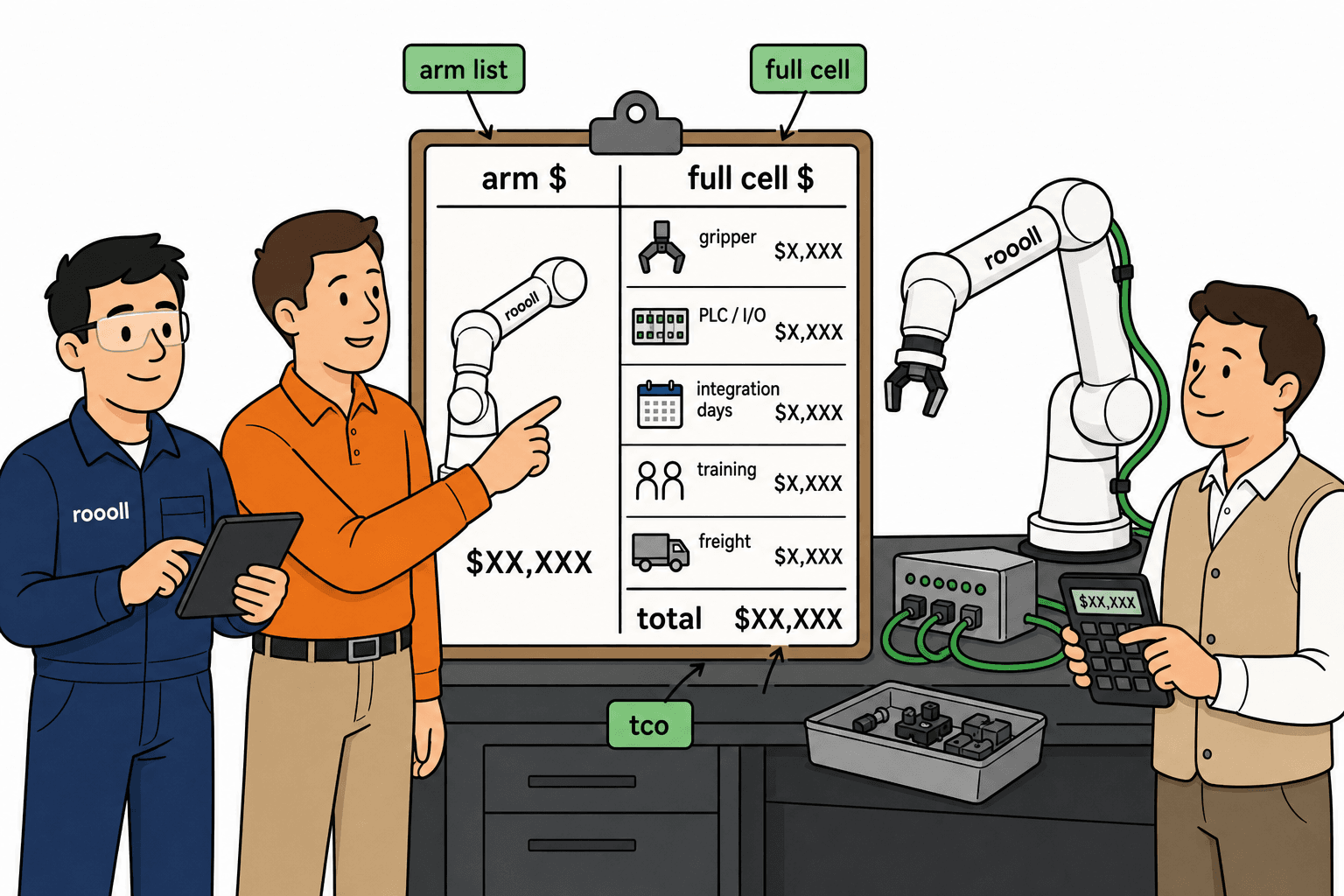
Procurement’s first email usually asks “how much is this cobot?” The awkward truth is that answering with arm list price and answering with what it takes to run in production are two different ledgers: the first is easy to remember, while the second is what decides whether the line stalls after delivery because the gripper, fixture, PLC handshake, or downtime window never appeared on the first quote. This page only clarifies where the money goes. If you next need payback math and how to fill the gain side, open the ROI guide alongside it—the two pages are not substitutes.
Published evidence bands (arm and cell)
Before going deeper, it helps to put the ranges that keep showing up in buyer guides on one table. Treat them as sanity checks, not as a quote for your plant.
| Metric | Published band | Source |
|---|---|---|
| Cross-brand arm range | About $5.7k–$65k+ (listed + estimated mix) | RobotSourced pricing |
| Mainstream Western arms | About $22k–$72k by payload | Robotomated cost guide |
| Simple full cell | About $45k–$75k (arm + EOAT + integration) | Robotomated cost guide |
| Vision / multi-station cell | About $70k–$130k | Robotomated cost guide |
| Complex multi-robot / ERP | About $120k–$250k+ | Robotomated cost guide |
| Hardware share of project | About 25–50% | AMD Machines · TCO |
| Integration share | About 30–50% | AMD Machines · TCO |
| Payback single / multi-shift | About 12–24 / 8–14 months | Robotomated cost guide |
There is also a quieter difference of framing: RobotSourced “budget deployments” can land near $8k–$12k (arm + basic gripper + self-install), which is a minimal self-integration story. Once you add professional integration, a written risk assessment, and production acceptance, the number usually climbs back into the full-cell bands above. Both figures show up in public material; the contract has to say which one you bought.
Arm price bands by tier (sanity check—not a quote)
List prices move with region, configuration, duty, and distributor policy, so the tiers below are only a pre-PO map of “roughly which layer you are in,” not a purchase commitment.
| Tier | Rough arm price | Typical payload | How to use |
|---|---|---|---|
| Value / entry | About $6k–$15k | About 3–5 kg | Light pick-place pilots; still add EOAT and fixtures |
| Mid industrial cobot | About $15k–$35k | About 5–10 kg | Common SMB tending / assembly starting point |
| Mainstream Western | About $25k–$55k | About 5–16 kg | Dense integrator and peripheral ecosystems |
| High-payload cobot | About $50k–$72k+ | About 16–30 kg | Palletizing / heavy transfer—check full-stack far-corner TCP |
At similar 5 kg / 6-axis specs, public comparisons often show China-tier list prices about 30–80% lower than Western peers (RobotSourced). That gap rarely vanishes; it usually relocates into integrator density, spare paths, certified peripherals, and software maturity. When you compare arm stickers, put those non-hardware rows on the same page—or “cheap” tends to return in month two as delay or a change order.
Full-cell stack: above and below the quote
The arm line is only the most visible invoice row. What usually decides whether a project derails is the “below the waterline” work that never made the first quote—not always because those lines are huge, but because missing any one of them rewrites acceptance timing.
Above the waterline usually covers the arm and controller (cabinet or integrated), teach pendant, baseline cabling, and—on cross-border projects—freight, duty, and insurance as separate lines.
Below the waterline is better checked as a table: for each row, ask who pays, who owns the calendar, and who signs acceptance.
| Line | Published band | Ask |
|---|---|---|
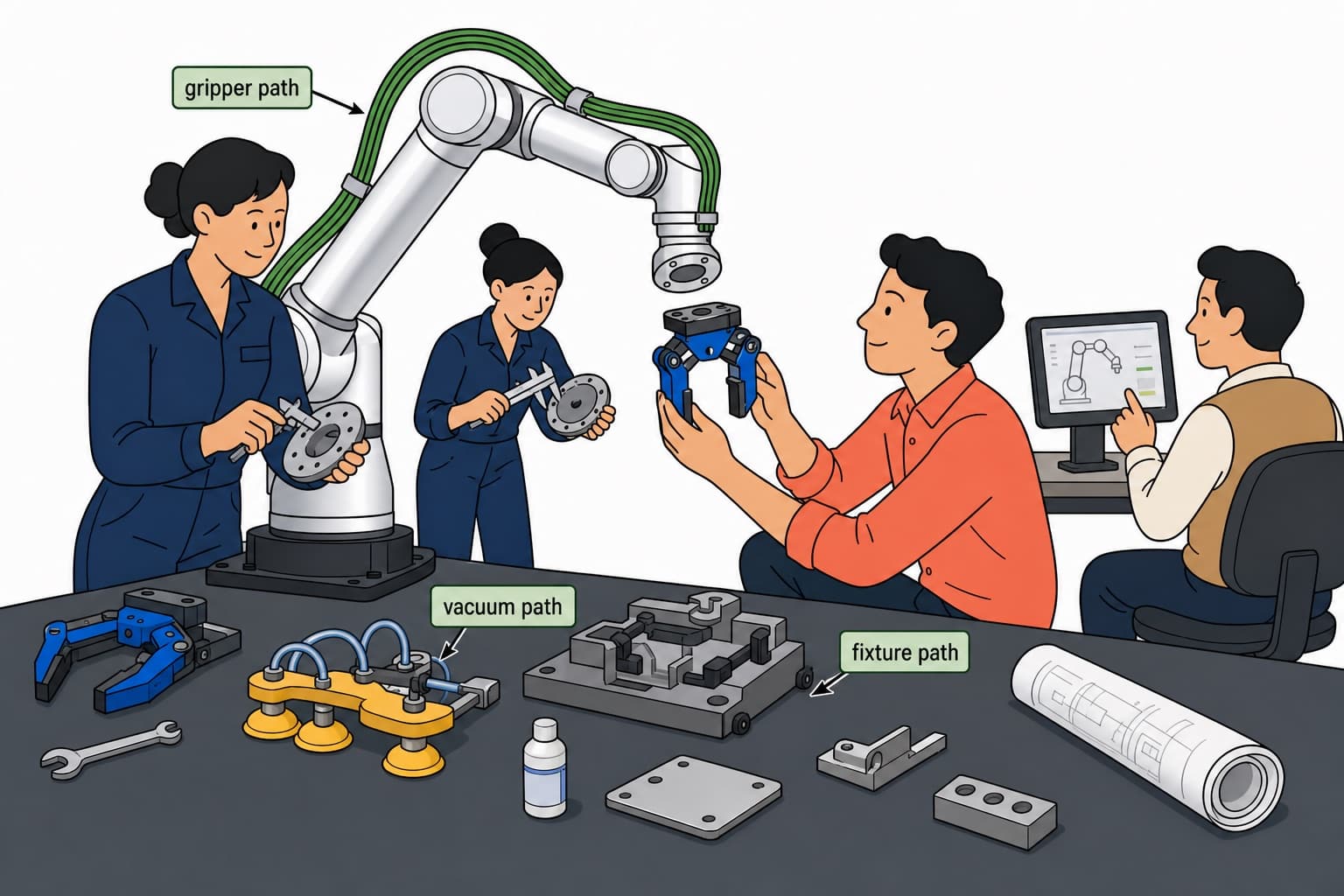
| EOAT | Grippers/vacuum often $1k–$8k; force/weld/screwdriving $4k–$15k+ | Is the path chosen? See End-effector guide |
| Vision | 2D often $3k–$6k; 3D/bin often $8k–$20k+ | Can fixtures remove vision in phase one? |
| Mechanical | Base, bench, guarding, dress often $3k–$15k | Is layout frozen? See Workcell layout |
| Integration labor | Simple $5k–$25k; medium $25k–$50k; complex $50k–$100k+ | Are person-days in the SOW, not only “includes commissioning”? |
| Safety assessment / devices | About $2k–$10k (more with fencing/curtains) | Collaborative cells often reference ISO 10218 / ISO/TS 15066; scope in Safety & I/O |
| Training | Ops $0.5k–$1.5k/person; programmer $2k–$5k/person | Who owns exceptions in month one? |
| Downtime window | Lost margin on orders not shipped | Owners often feel this before “one operator saved” |
Even after Year 0 is complete, do not stop at the acceptance signature. Maintenance and spares often run about $2k–$5k/arm/year (vendor contracts about $3k–$8k), software licenses about $0.5k–$3k/arm/year, and two-shift energy about $0.2k–$0.6k/arm/year. If those three lines never enter a three-year TCO sheet, the “cheapest arm” can still lose on Year-two renewals. For the longer hidden-integration narrative, see Hidden cost perspective.
Cell cost by application (same arm sticker, different landing)
The same arm tier can land at very different cell totals once process constraints show up. Pick-and-place is often gated by whether fixtures can remove vision; CNC tending is pulled up by auto-doors, I/O, and chips/coolant protection; palletizing has to price vacuum mass against payload, pattern software, and pallet-swap idle at the same time.
| Application | Published cell band | Cost drivers |
|---|---|---|
| Simple pick-and-place | About $35k–$75k | Whether fixtures remove vision |
| CNC tending | About $50k–$120k | Auto-door $2k–$10k, I/O, chips/coolant; see CNC guide |
| End-of-line palletizing | About $50k–$120k | Vacuum mass vs payload, pattern software, pallet swap; see Palletizing guide |
| Screwdriving / dispense | Usually above simple pick-place | Process tool plus vision/force adders |
For a more concrete sense of scale—still swap in your part weight, takt, and labor rates—public deployment examples often cluster around three tiers: budget self-integrate near $8k–$12k (value arm ~$7k + basic gripper ~$0.8k + self-install, usually without a full SAT); standard integrate near $35k–$45k; mainstream cells near $60k–$90k. That matches the order of RobotSourced deployment examples and Robotomated simple/medium cells. Write in the contract whether acceptance is an empty-air demo or a worst-part N-loop runoff—only the latter tracks the full-cell band in the table.
Why one source says 25% hardware and another says 70%
Those two claims usually describe different buying paths, not a fight over who is lying. When a team self-integrates and EOAT is cheap, the arm can dominate cash outlay and the 50–70% story appears; once integration is bought and vision plus safety gear are added, the arm’s share more often returns to the AMD TCO band around 25–50%. In a capex meeting it is more useful to argue in absolute line items than to weaponize a single percentage.
Can you skip the integrator?
For simple, consistent, vision-free pick-and-place, capable teams can self-integrate and published notes often cite savings around $10k–$30k, usually in exchange for about 2–4 weeks of internal labor (Robotomated). Once vision, force control, machine I/O, or cross-shift unmanned enters the scope, bought integration is often cheaper after delay and rework are priced. For how the calendar usually unfolds, see the Integration timeline guide.
Cobot vs industrial on full-cell cost
If class is still open, do not spend the meeting fighting over arm stickers. Published SMB comparisons often cite cobot cells around $40k–$120k versus industrial cells around $100k–$300k+ with guarding included; extreme takt or heavy duty may favor industrial throughput, but fencing and floor perimeter raise Year 0. The fuller split lives in Cobot or industrial.
How r-Series enters the same sheet
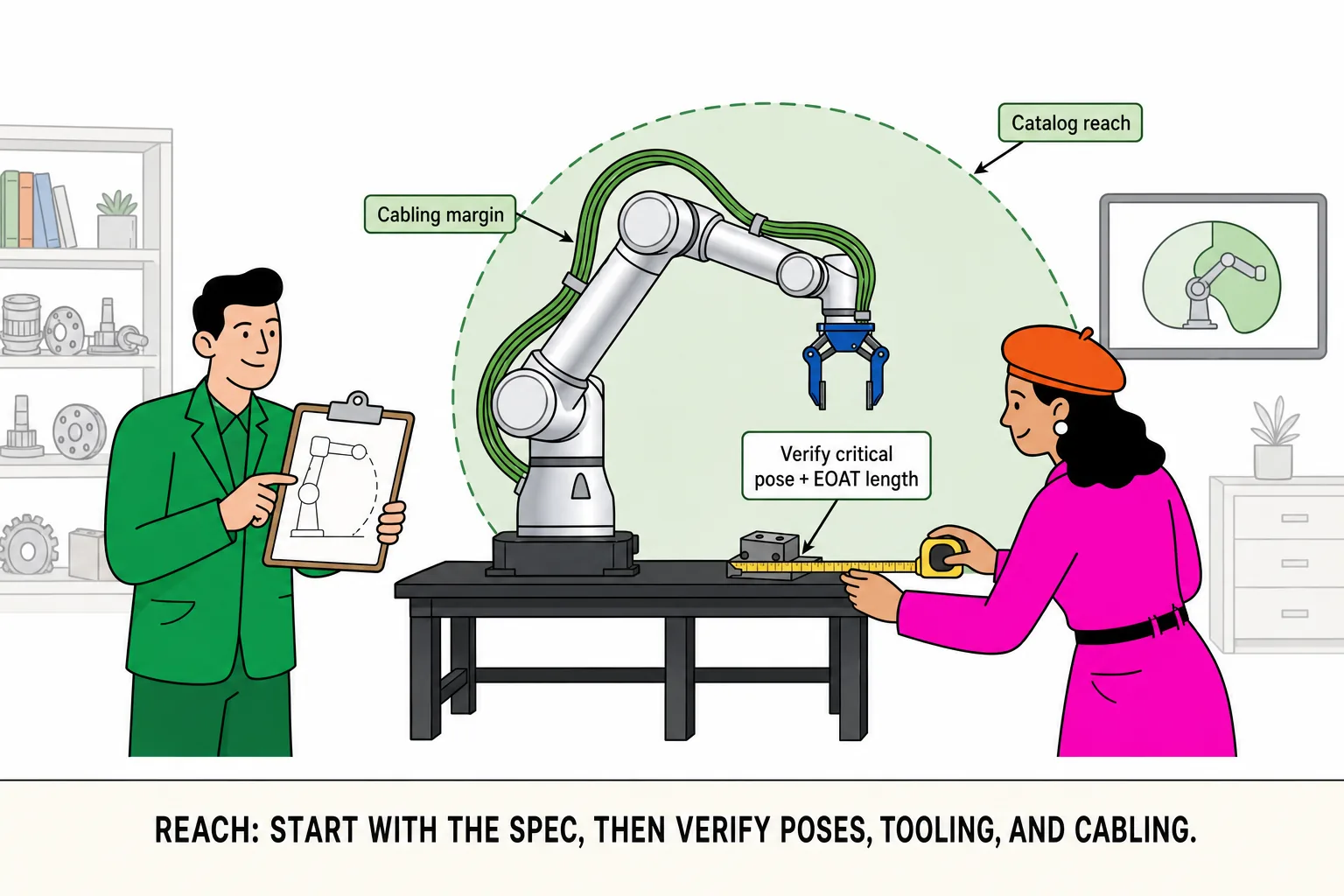
Do not reverse-engineer a model from the cheapest list price you happen to see. A stabler order is to freeze heaviest part plus EOAT, farthest TCP, target takt, and infeed tolerance, then shortlist two or three rows in Comparison, Full lineup specs, or Product Advisor. When footprint or door interference is still fuzzy, check true scale in AR preview; align inquiry fields with the RFQ checklist.
Four common budget failures
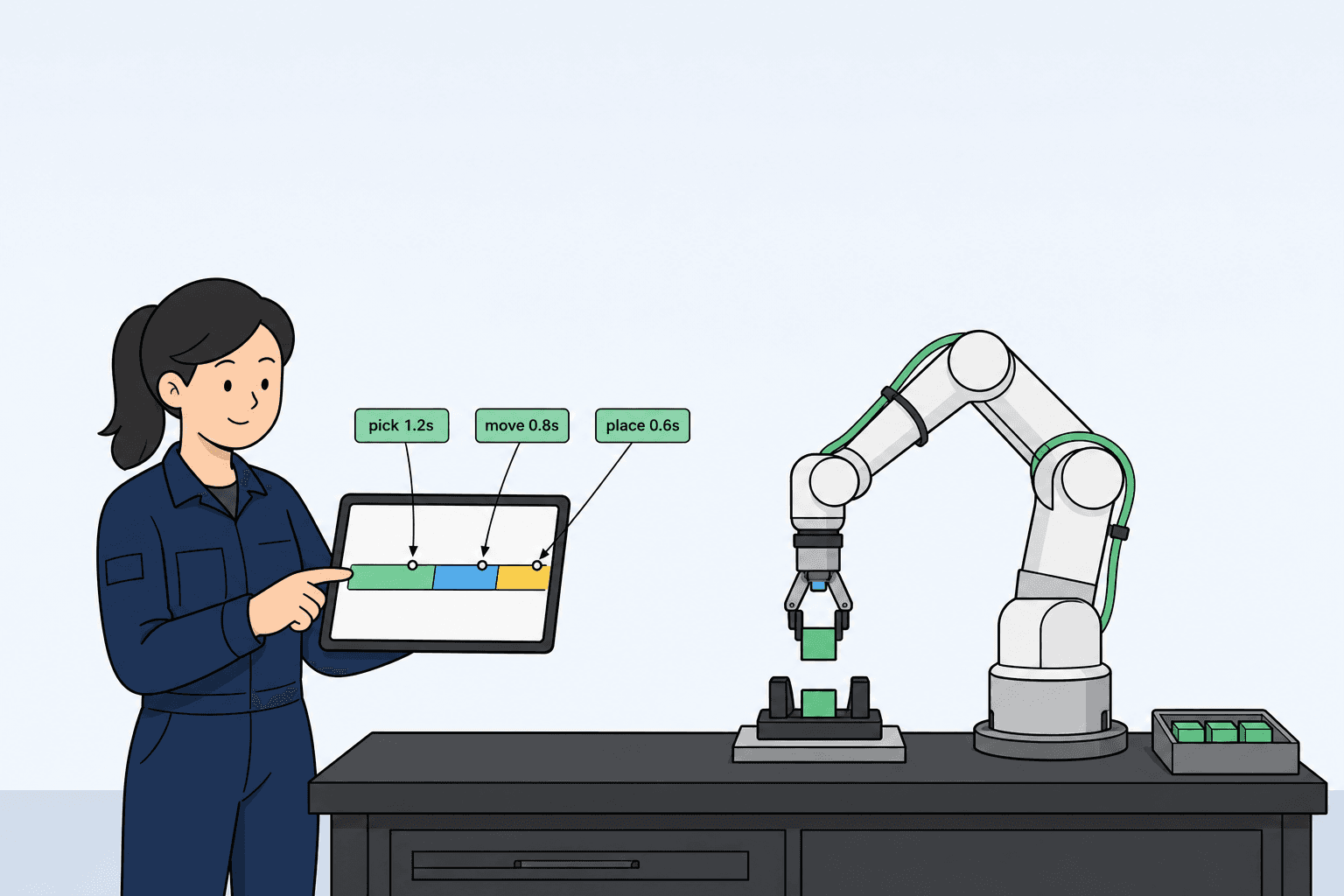
Budget failures rarely come from “missing one percentage.” They come from scope drifting verbally. An arm-only PO with gripper and fixture marked TBD leaves the line waiting on tooling after delivery. Catalog takt inverted into capacity—4 s in demo, 7 s in production—kills the payback sheet. A self-integrate budget labeled turnkey without SAT language almost guarantees an acceptance fight. Ignoring Year 1–3 software renewals and spares can still flip the “cheapest” option in year two.